
Before Your First Root Canal: What a Single-Sitting RCT Actually Feels Like
That Moment Before You Walk In
You’ve got a toothache that won’t quit. Your dentist mentioned "root canal," and suddenly your mind filled in the blanks–probably with every worst-case scenario you’ve ever heard whispered in a waiting room. I want to be honest with you: that nervousness is completely normal, and I hear it almost every day from patients sitting in my chair.
Here’s what I’ve learned after two decades of practice: the root canal you’re imagining and the root canal you’ll actually experience are often two very different things. This guide is meant to walk you through what really happens during a single-sitting root canal treatment, so you can show up informed, calmer, and knowing exactly what to expect.
Why Your Tooth Hurts in the First Place
Let me start with the basics, because understanding why you need this treatment takes away a lot of the fear.
Inside every tooth is a living tissue called the pulp–think of it as the tooth’s nerve and blood supply. When you get a deep cavity, a crack, or repeated trauma to a tooth, bacteria can sneak in and infect that pulp. Once that happens, the pulp becomes inflamed and eventually dies. Your body’s immune system tries to fight back, but it can’t reach the infection inside the sealed tooth, so you get pain, swelling, and sometimes an abscess.
A root canal is simply the process of removing that infected or dead pulp, cleaning out the inside of the tooth, and sealing it back up so it can’t get infected again. It’s not punishment–it’s rescue. We’re saving your tooth.
The Day Before: What You Should Know
There’s no special prep needed. Eat normally, brush and floss like you usually do, and get a good night’s sleep if you can. If you’re anxious, that’s okay–many patients tell me they don’t sleep well the night before, and that’s completely understandable.
One thing I always recommend: if you’re nervous about needles or the sound of dental instruments, let your dentist know before you sit down. At Pune Dental Studio, we take that seriously. We use noise-cancelling headphones, and we have a protocol to make the injection itself almost unnoticeable. I’ll explain more about that in a moment.
When You Arrive: The Calm Before Treatment
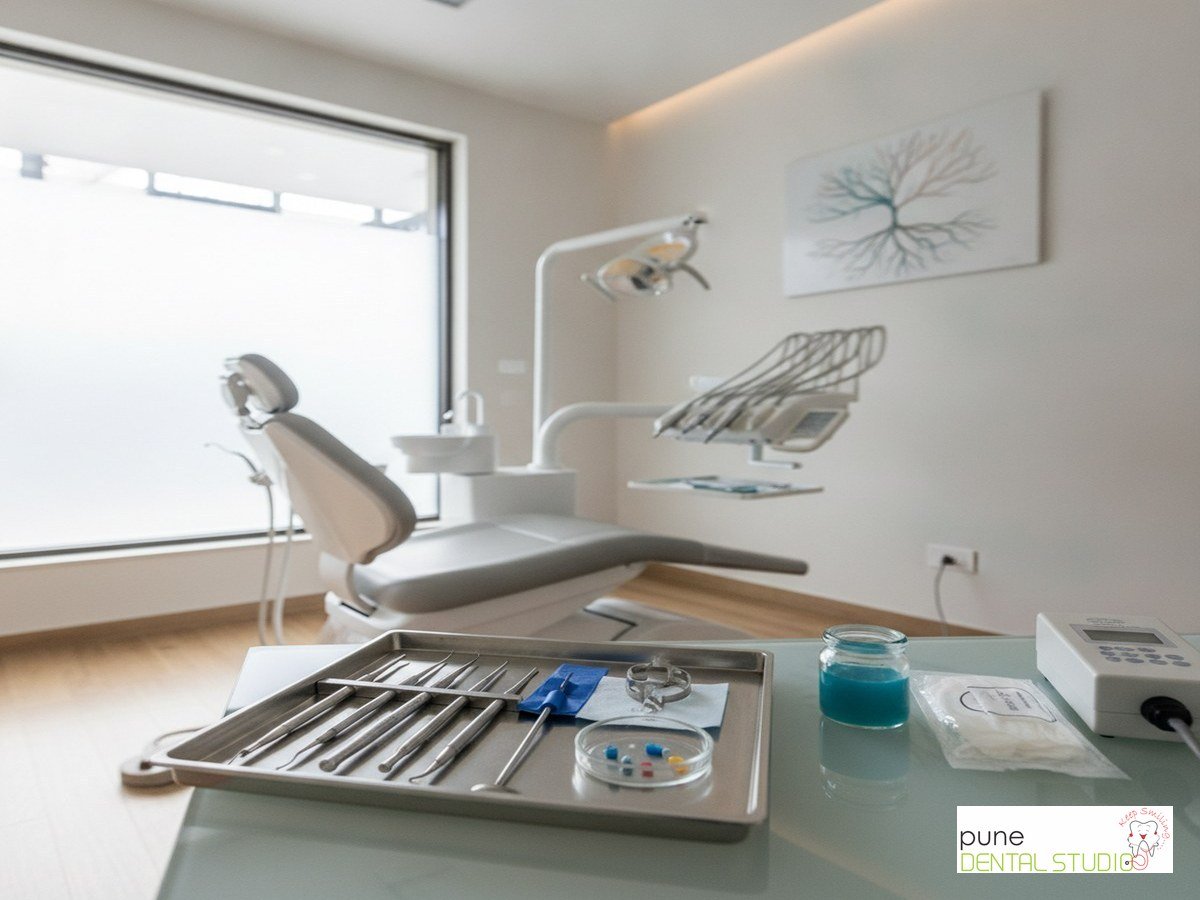
Walking into a dental clinic can feel clinical and intimidating. That’s why we’ve deliberately designed our space differently. You’ll notice it’s quieter than you’d expect, with warm lighting, aromatherapy, and greenery–the opposite of the sterile, harsh environments that amp up anxiety.
We start with a consultation and imaging. I’ll take digital X-rays to see exactly what’s happening inside your tooth–where the infection is, how deep it goes, whether the roots are curved or straightforward. This imaging is crucial because it tells me everything I need to know to plan your treatment.
Then we talk. I’ll explain what I’m seeing, why you need the root canal, and exactly what’s going to happen during the procedure. You’re not just a patient being worked on–you’re someone I’m partnering with to save your tooth.
The Injection: The Part Everyone Worries About
Let’s address the elephant in the room. Yes, there’s a needle. But here’s what happens before it ever touches your mouth:
First, I apply a thick, extra-strength topical numbing gel to the area. You’ll feel a slight taste–nothing pleasant, but it’s not painful. This gel sits there for a minute or two, numbing the surface of your gum tissue completely. By the time the needle arrives, your gum is already asleep. Most patients tell me they barely feel the injection happening.
The anesthetic itself takes a few minutes to fully kick in. You might feel a slight pressure or hear a gentle hum, but there should be no sharp pain. If you do feel discomfort, raise your hand immediately–we can add more numbing gel or wait a bit longer. There’s no rush.
Once you’re numb, the inside of your tooth is completely frozen. What you’ll feel from this point forward is pressure and vibration, but not pain. That’s the promise of modern local anesthesia, and it works.
The Procedure Itself: What’s Actually Happening
Here’s the honest walkthrough of a single-sitting root canal:
Step 1: Isolation and Access
I’ll place a rubber dam around your tooth–a thin rubber sheet that isolates the tooth and keeps it dry. Yes, it feels a bit strange, and yes, you’ll feel like you can’t swallow. You can swallow; the dam just creates a barrier. Many patients find it comforting because it means the area is sealed off and clean.
Then I create a small opening in the top of the tooth to access the pulp chamber. You’ll hear the sound of the drill, and you’ll feel vibration, but remember–no pain. The sound is often louder in your own head than it actually is. Noise-cancelling headphones help tremendously here.
Step 2: Removing the Infected Pulp
Once I’ve opened the tooth, I use small, precision instruments to gently remove the infected or dead pulp tissue from inside. This is where the real work happens. You might feel pressure and hear some sounds, but the sensation is nothing like the sharp, throbbing pain you felt before the anesthetic.
Some patients describe it as feeling like someone is "working inside" their tooth–which is exactly what’s happening. It’s not comfortable, but it’s not painful. The whole process usually takes 20 to 40 minutes, depending on the tooth’s anatomy.
Step 3: Cleaning and Shaping the Root Canals
Teeth don’t have just one canal–they often have two, three, or even four. I use progressively larger instruments to clean and shape each canal, removing all the infected tissue and bacteria. This is done with precision; I’m not just drilling randomly. Each instrument is carefully sized and used in sequence.
You’ll hear different sounds–a gentle whirring, sometimes a slight scraping sensation. Again, pressure and vibration, but no sharp pain.
Step 4: Filling the Canals
Once the canals are clean and shaped, I fill them with a biocompatible material called gutta-percha–a rubber-like substance that seals the canal completely. This prevents bacteria from re-entering and re-infecting the tooth.
I use a warm, controlled technique to ensure the filling material reaches all the way to the tip of each root. You might feel warmth inside the tooth, which is normal.
Step 5: Sealing the Access Hole
Finally, I seal the access hole I created at the beginning with a tooth-colored composite filling. The tooth is now completely sealed and protected.
The entire procedure typically takes 60 to 90 minutes for a single-sitting root canal. That sounds like a long time, but most patients tell me it goes faster than they expected.
Why Single-Sitting? The Science Behind It
You might wonder why we can do this in one visit instead of spreading it over two or three appointments. Here’s what the research shows:
Long-term success rates for single-visit root canals are essentially the same as multiple-visit treatments–around 92% versus 90%. The tooth heals just as well. The main difference is in the short term: patients experience less overall post-operative pain with single-sitting treatment because the tooth is only anesthetized and traumatized once, rather than multiple times.
There are exceptions. If your tooth has significant swelling, continuous drainage, or a complex infection, we might recommend a multiple-visit approach to allow the canal to drain and be medicated with calcium hydroxide between visits. But for most cases of irreversible pulpitis (a live, inflamed nerve) or straightforward necrotic teeth (dead nerves), single-sitting treatment is safe, effective, and actually more comfortable.
The Moment You’re Done
When I place that final filling and step back, you might feel a wave of relief. You’ve made it through. The pain that brought you in–that sharp, throbbing ache–is gone. Your tooth is no longer infected.
You’ll still be numb for another 30 minutes or so. I always recommend not eating or drinking anything hot until the numbness completely wears off; you don’t want to accidentally bite your cheek or burn your mouth.
Aftercare: The First 24 Hours
This is where a lot of patients get confused. Here’s what’s normal and what’s not:
Normal sensations:
- Mild to moderate soreness or aching in the tooth and surrounding gum
- Slight swelling of the gum or cheek
- Sensitivity to pressure when chewing
- A feeling that the tooth is "higher" or "different" than your other teeth (this usually resolves in a few days)
What to do:
- Take over-the-counter pain relief like ibuprofen or acetaminophen as directed
- Apply ice to the outside of your cheek for 10 minutes at a time, with breaks in between
- Avoid hard, crunchy, or sticky foods for the first few days
- Chew on the opposite side of your mouth
- Avoid very hot foods and drinks
- Continue brushing and flossing gently; keeping the area clean helps it heal faster
When to call us:
- If you have severe pain that doesn’t improve with over-the-counter medication
- If swelling increases after 48 hours or spreads to your face or neck
- If you develop a fever
- If you have difficulty swallowing or breathing (this is rare, but it’s an emergency)
Most patients feel significantly better within 24 to 48 hours. By a week, most soreness is gone.
The Weeks Ahead: Protecting Your Investment
Here’s something important: a root canal-treated tooth is now more fragile than it was before. The tooth has lost its blood supply, which means it becomes more brittle over time. That’s why most dentists recommend placing a crown on a root canal-treated tooth within a few months.
I know crowns feel like an extra cost, but think of it this way: you’ve just invested time and money in saving your tooth. A crown is like insurance–it protects that investment and can extend the life of your tooth by decades.
We’ll discuss crown options during your follow-up visit. At Pune Dental Studio, we provide transparent pricing in writing before any procedure, so you’ll know exactly what to expect financially.
Common Questions Patients Ask Me
Will the tooth still be sensitive after a root canal?
Temporarily, yes. But this sensitivity usually fades within a few weeks. If it persists beyond that, let us know–sometimes a small adjustment to the filling or bite can help.
Can a root canal fail?
It’s rare, but it can happen. Sometimes a canal is missed, or bacteria re-enter the tooth. If that happens, we can retreat the tooth–a procedure called retreatment. Success rates for retreatment are still quite high.
Will I need antibiotics?
Not always. Antibiotics don’t penetrate well into the tooth itself, so they’re not typically used for root canal treatment. If you have signs of systemic infection (fever, swelling in your face or neck), that’s different–we’d discuss antibiotics with you.
How long will the root canal last?
If properly sealed and protected with a crown, a root canal-treated tooth can last a lifetime. I’ve seen teeth I treated 15 years ago still functioning perfectly.
Is a root canal really better than extraction?
Almost always, yes. Keeping your natural tooth is almost always better than removing it. Even with a crown, a natural tooth functions better than an implant or bridge. We save teeth whenever we can.
Why I Love Doing Root Canals
I know that sounds strange. But here’s the truth: a root canal is one of the most rewarding procedures I do. Someone walks in in pain, scared, convinced their tooth is done for. Two hours later, they walk out with their tooth saved, the infection gone, and their life back to normal.
I’ve had patients tell me that getting a root canal was nothing like they feared. Some even say it was easier than getting a filling. That’s because we’ve invested in the right technology, the right training, and the right mindset–which is that your comfort and understanding matter just as much as clinical excellence.
Ready to Take the Next Step?
If you’re facing a root canal and you’re in Baner or nearby Pune, I’d like to invite you in for a consultation. We’ll take imaging, I’ll explain exactly what’s happening in your tooth, and we’ll talk through your options together. No pressure, no surprises, no fear-based sales tactics.
You can reach us at +91 98811 92594 or visit punedentalstudio.com to book an appointment. We’re located at Office No 102, 1st floor, The Mint, Off Baner Road, Opposite Kapil Mallhar Society, Baner.
I promise you: the root canal you’re dreading is almost certainly better than the one you’re imagining. Let’s save your tooth together.
–Dr. Sunayana Khade
Dentistry that feels like a deep breath.
See it for yourself – your first visit is a conversation, not a commitment.
Book a Visit