
Can You Really Do a Root Canal in One Sitting? What Patients in Baner Should Know
The Question I Hear Most Often
You’re sitting in the chair, your tooth is throbbing, and I’ve just told you that you need a root canal. Then comes the question–almost always the same one:
"Can’t you just do it all today? In one sitting?"
I get it. You’re in pain. You want it fixed. The thought of coming back multiple times feels exhausting, expensive, and honestly, a bit scary. And I won’t lie to you–that’s a completely reasonable thing to want.
The truth? Single-sitting root canals are absolutely possible, and they’re actually far more common than many people realize. But like most things in dentistry, there’s real nuance here, and I’d rather give you the honest picture than a quick yes or no.
Let me walk you through what the science actually shows, when it makes sense, and what you should know before you decide.
What the Research Actually Says
Here’s the thing that surprised me when I first dug into the data: there is no statistically significant difference in long-term success between single-visit and multiple-visit root canals. This comes from systematic reviews and meta-analyses in endodontics–the specialty focused on root canal treatment.
Let me break down the numbers:
Long-term healing and tooth survival:
- Single-visit root canals succeed about 92% of the time
- Multiple-visit root canals succeed about 90% of the time
That’s measured over 6 to 12 months after treatment, looking at whether the tooth feels normal, functions properly, and shows no signs of infection on X-rays.
So the question isn’t really "Is single-sitting safe?" The question is more like "When does it make sense, and when should we slow down?"
When Single-Sitting Actually Works Best
I can confidently complete a root canal in one sitting for most patients. Here’s what I’m looking for:
The tooth has a live, inflamed nerve (irreversible pulpitis). This is when the nerve is still alive but badly inflamed–usually from deep decay or trauma. In these cases, about 92% of the time, I can clean it, shape it, fill it, and seal it all in one appointment. The nerve tissue is still vital, which makes the whole process more straightforward.
The tooth is not actively draining or weeping. If there’s pus or fluid actively coming out of the tooth or the gum around it, that’s a sign the infection is still "talking." In those cases, I’ll often recommend a two-visit approach so we can medicate the canal with calcium hydroxide between visits. This gives the infection time to settle and the body time to start healing.
There’s no significant swelling in the face or jaw. Facial swelling tells me the infection has spread beyond the tooth root into the surrounding bone and soft tissue. When that happens, rushing to seal it all in one visit can trap bacteria inside, and that’s not what we want.
The patient is comfortable and the appointment isn’t running long. Root canals take time–usually 45 minutes to 90 minutes depending on the tooth. If we’re running behind, if you’re in pain, or if you’re anxious, I’d rather give you a break, let you rest, and finish it properly next time.
When I Recommend Two Visits Instead
There are real clinical reasons to split the treatment:
Complex or severely infected teeth. If the canal system is very curved, calcified, or the infection is deep and stubborn, taking two visits lets me be more thorough. I can medicate the canal between visits with calcium hydroxide, which is like a healing paste that kills remaining bacteria and reduces inflammation.
Active infection with symptoms. If you’re experiencing spontaneous pain (it hurts without you even touching it), swelling, or drainage, I’ll usually do the cleaning and shaping in the first visit, leave the canal open to drain, and seal it in the second visit. This approach has a slightly lower rate of acute flare-ups–about 3% compared to 5% for single-sitting cases.
Your immune system needs a break. Some patients have conditions that affect healing, or they’re on medications that impact inflammation. A two-visit approach gives their body time to respond to the initial treatment.
You’re anxious or in significant pain. If you’re nervous or hurting badly, I’m not going to rush you through a 90-minute procedure just to check a box. Your comfort and trust matter more than speed.
What Actually Happens During the Appointment
Let me walk you through what a single-sitting root canal looks like at my clinic, because I think a lot of the anxiety comes from not knowing what to expect.
First, we numb the tooth properly. Before any needle comes near you, I apply a specialized topical numbing gel. This isn’t the standard stuff–it’s extra-strength, and it means you won’t feel the injection. This is one of those small things that makes a huge difference for anxious patients.
I take a 3D scan of your tooth. We use digital intraoral scanning instead of those gooey impression trays. You can actually see your tooth on the screen–exactly what we’re working with.
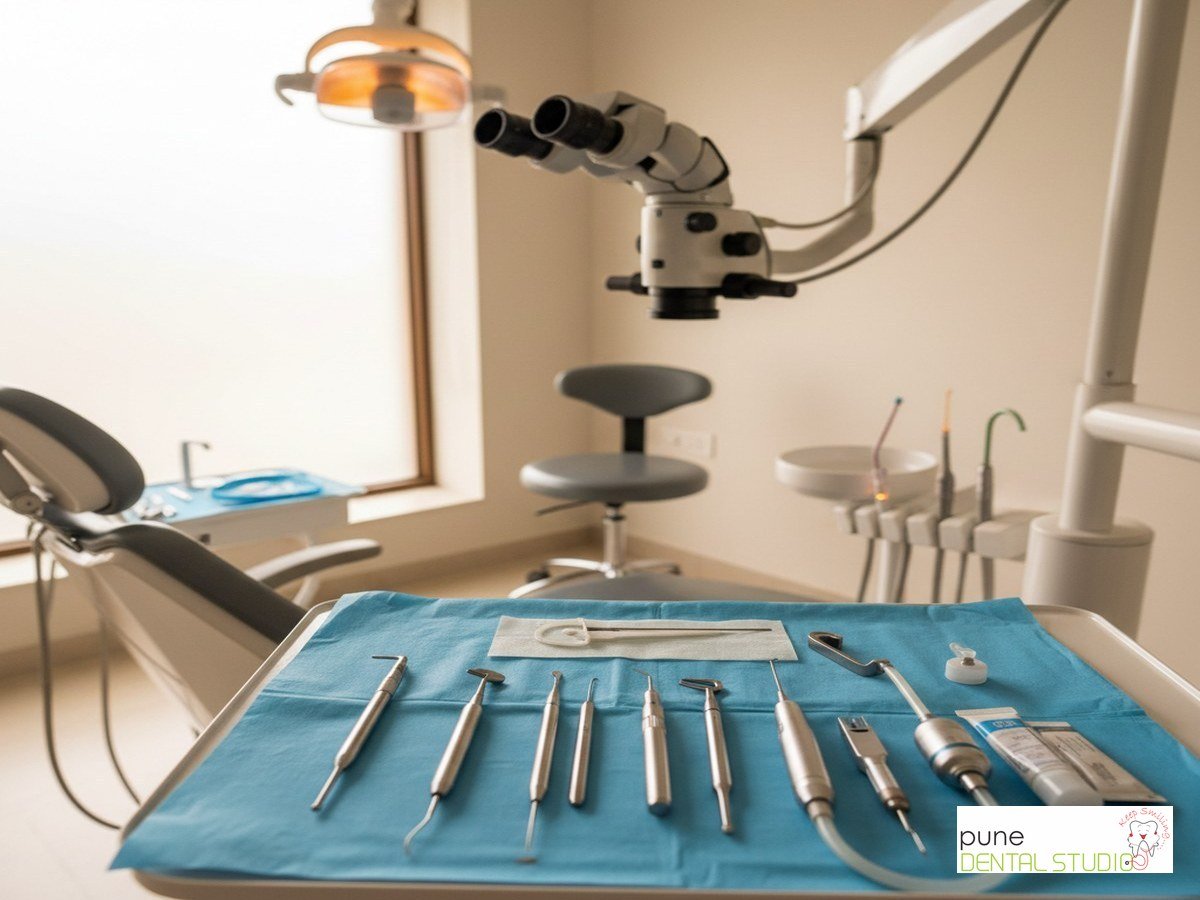
I remove the infected or inflamed nerve tissue. Using specialized instruments and a microscope or magnification, I carefully access the nerve chamber, remove the tissue, and clean out the canal system. This is the part that takes the most time, and it’s where precision matters.
I shape and prepare the canal. The canal needs to be shaped in a way that allows it to be filled completely and sealed. I use files of increasing sizes, working carefully to avoid damaging the delicate walls of the canal.
I fill and seal the canal. Once it’s clean and shaped, I fill it with a biocompatible material called gutta-percha–a rubber-like substance that seals the space completely. This prevents bacteria from re-entering.
I place a temporary or permanent restoration. Depending on the tooth and your situation, I might place a temporary filling to protect it, or if we’re finishing everything today, a more permanent restoration.
The whole thing typically takes 45 to 90 minutes. You’re numb the entire time, and you won’t feel pain–though you might feel pressure or vibration.
What About Pain After the Treatment?
This is something people worry about, and I want to be honest: some tenderness after a root canal is normal. Your tooth has been through a procedure, and the tissues around it have been irritated.
Here’s what the data shows:
Post-operative pain within 48 hours:
- Single-visit cases: about 20% of patients experience some mild to moderate pain
- Multiple-visit cases: about 35% experience pain
Why is single-sitting actually better for pain? Because your tooth is only traumatized and anesthetized once. With multiple visits, you’re putting the patient through the numbing and the procedure twice, which can mean more cumulative inflammation.
The pain that does occur is usually manageable with over-the-counter pain relief like ibuprofen or acetaminophen. If you’re taking ibuprofen, it actually helps reduce inflammation, which speeds healing.
The Real Myth I Want to Bust
Here’s what I think gets lost in the conversation: doing a root canal in one sitting doesn’t mean rushing. It means being prepared, having the right tools, and making a clinical decision based on your specific tooth and situation.
At Pune Dental Studio, we use digital 3D scanning, which means I can see exactly what I’m working with before I even start. I’m not guessing. I’m not working blind. That technology, combined with proper magnification and modern instruments, makes single-sitting treatment safer and more predictable than it was even ten years ago.
But I also won’t do a single-sitting root canal just because you want it done fast. If your tooth needs two visits to heal properly, that’s what we’ll do. My job is to give your tooth the best chance of long-term success, not to hit a speed target.
What Happens After Your Root Canal
Regardless of whether it’s one visit or two, aftercare is crucial:
Avoid chewing on that tooth until it’s fully restored with a crown or permanent filling. A root canal tooth becomes more brittle over time, and it needs protection.
Take pain relief as directed. Ibuprofen is your friend–it reduces inflammation and helps with healing.
Watch for signs of complications. Some mild discomfort is normal for a few days. But if you develop severe pain, significant swelling, or fever, contact me right away.
Get the tooth restored properly. A root canal is only half the job. The tooth needs a crown or a strong permanent restoration to seal it and give it strength for chewing. This is where the long-term success really depends on what happens next.
Keep up with your regular cleanings. A root canal tooth is still your natural tooth, and it still needs the same care and attention as any other tooth.
A Few Questions People Ask
Will I need a crown after the root canal?
Most of the time, yes. Root canal teeth lose moisture over time and become more fragile. A crown protects them and gives them back their function. At Pune Dental Studio, we can discuss crown options–from metal to zirconia to all-ceramic–based on your tooth’s location and your preferences.
How much does a single-sitting root canal cost?
I always share pricing in writing before we begin treatment. The cost depends on which tooth it is and how complex the case is, but I’m transparent about every step. No surprises.
Can I go back to work the same day?
Yes. Once the numbness wears off, you can return to normal activities. You might have some mild tenderness, but most people manage it fine with over-the-counter pain relief.
What if the root canal doesn’t work?
It’s rare, but it can happen. If a tooth doesn’t heal properly after a root canal, you have options–sometimes a second root canal (called retreatment), or in some cases, an extraction and implant. But success rates are high, especially with modern techniques.
Is a single-sitting root canal less likely to work than a multiple-visit one?
No. The long-term success rates are essentially the same. What matters is the quality of the cleaning, shaping, and filling–not how many times you come in.
The Bottom Line
Yes, a single-sitting root canal is real, it’s safe, and for most patients, it’s the best option. The research backs it up, and I do them regularly with excellent outcomes.
But "can we do it in one sitting?" isn’t the only question to ask. The better questions are: "What does my specific tooth need?" and "What gives this tooth the best chance of staying healthy for the next 10, 20, or 30 years?"
That’s the conversation I want to have with you. Not a sales pitch for speed, but a real clinical discussion about your tooth and what’s best for you.
If you’re dealing with tooth pain or you’ve been told you need a root canal, I’d love to see you for a consultation. We can take a 3D scan, talk through your options without pressure, and make a plan together. No surprises, no rushing–just honest, caring dentistry.
Reach out to us at +91 98811 92594 or visit us at Office No 102, 1st floor, The Mint, Off Baner Road, Baner, Pune. I’m here to help.
–Dr. Sunayana Khade
Dentistry that feels like a deep breath.
See it for yourself – your first visit is a conversation, not a commitment.
Book a Visit