
Dentures at 65: Why Modern Dentures Feel and Function Differently Than Your Parents' Did
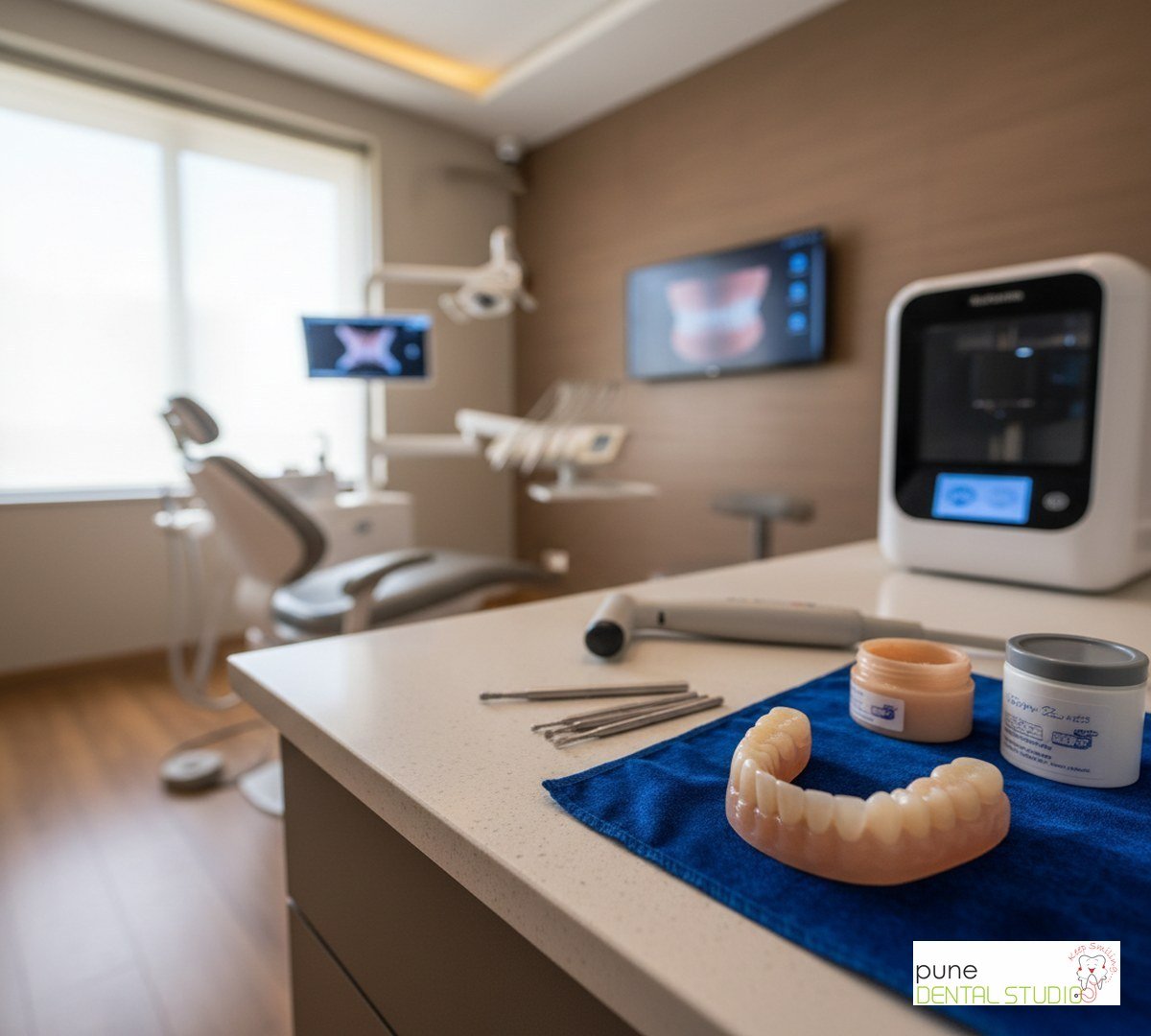
When Your Parents’ Dentures Aren’t Your Future
I hear this often from patients in their 60s who come in nervous about dentures: "My mother had dentures, and she hated them. She could barely eat, and she was always adjusting them." Then they pause and add, "Is that going to be me?"
The honest answer? Not even close.
If your last real experience with dentures was watching a parent or grandparent struggle with them decades ago, you’re imagining a very different product than what we can offer you today. The dentures your parents wore were built on principles from the 1970s and 80s. Modern dentures–the ones we craft here at Pune Dental Studio–are engineered with materials, design methods, and fitting techniques that would honestly seem like science fiction to someone from that era.
Let me walk you through what’s actually changed, and why the experience of wearing dentures today is genuinely better than it was even ten years ago.
The Old Way: Why Your Parents’ Dentures Felt Like Plastic
To understand the leap forward, it helps to know what we moved away from.
Traditional dentures were made using acrylic resin–a durable plastic that was affordable and easy to manufacture in bulk. The problem? It felt exactly like what it was: plastic. The material didn’t breathe. It didn’t flex naturally with your jaw. And because the fitting process relied on physical impression trays (those gooey, uncomfortable molds), the final fit was often a rough approximation rather than a precise match.
Your parents’ dentures probably felt bulky in the mouth, caused sore spots from pressure points, and shifted around when they ate or spoke. They needed constant adjustments. They couldn’t taste food properly because the plastic covered the roof of the mouth. And socially? Many people felt self-conscious, worried their dentures would slip during conversation or a meal.
That wasn’t a personal failing on their part. That was just the state of the technology.
What’s Changed: Materials That Feel More Like Teeth
The first major shift is in the materials themselves.
Modern denture bases now use advanced polymers and composite resins that are lighter, more flexible, and far more lifelike than traditional acrylic. Some of the best options include thermoplastic materials that adapt to the warmth of your mouth and move with your jaw in a way that feels natural. They’re also less porous, which means they resist staining and odor better–a real quality-of-life improvement.
The artificial teeth themselves have also evolved dramatically. Instead of uniform, obviously fake-looking plastic teeth, modern denture teeth are crafted with subtle color gradations, slight translucency, and surface texture that mimics real enamel. They catch light the way actual teeth do. When you smile, people see teeth–not dentures.
The Fitting Revolution: From Guesswork to Precision
Here’s where the biggest practical difference lies.
When we fit your dentures at Pune Dental Studio, we don’t use those old impression trays. Instead, we use 3D intraoral scanning–a technology that creates a precise digital map of your mouth in seconds. No gag reflex. No uncomfortable material in your mouth. Just a small digital wand that captures every contour.
That digital scan becomes the blueprint. We can see exactly how your jaw moves, where pressure points are likely to form, and how to distribute the fit across your mouth for maximum stability and comfort. The dentures are then manufactured to tolerances that would have been impossible to achieve manually twenty years ago.
The result? Dentures that fit snugly without feeling tight. They stay in place when you eat or talk. They don’t require constant adjustment because the fit is engineered, not guessed at.
Comfort: Why Modern Dentures Don’t Feel Like Plastic in Your Mouth
Beyond materials and fit, comfort comes down to design philosophy.
Old dentures covered as much of the mouth as possible, partly because that’s how they were designed, and partly because it improved stability. But that coverage meant they blocked taste and sensation. You’d eat a meal and barely taste it.
Modern dentures are designed with strategic coverage–we cover what’s necessary for stability and function, but we leave sensitive areas of your palate and tongue more exposed. This means you can actually taste your food again. You feel the temperature of what you’re eating. The sensory experience of eating is restored, not just the mechanical ability.
We also pay close attention to the thickness of the denture base. Thinner materials that are still strong enough mean less bulk in your mouth, less interference with your speech, and a more comfortable fit overall.
Function: Eating and Speaking Without Compromise
One of the biggest complaints I hear about old dentures is that people had to give up foods they loved. Nuts, apples, chewy meats–these were off the menu because dentures would slip or break.
Modern dentures, especially when fitted precisely and made with advanced materials, handle real eating. You can bite into an apple. You can chew steak. The stability is there because the fit is precise and the materials are engineered to flex and hold without breaking.
Speech is also dramatically better. Old dentures would click or slip when you talked, or they’d change the way certain sounds came out. Modern dentures, fitted properly, are stable enough that your speech remains natural. You won’t be constantly aware of them in your mouth.
Maintenance: Easier Than You’d Think
Here’s something that surprised many of my patients: modern dentures are actually easier to care for than old ones.
Because the materials resist staining and odor better, you don’t need to soak them in harsh chemicals every night. A gentle brush with a soft toothbrush and mild soap works fine. The newer materials don’t absorb bacteria the way older acrylic did, so they stay fresher longer.
We also provide clear guidance on care–what to avoid, how to handle them, when to bring them in for professional cleaning. It’s straightforward, and it extends the life of your dentures significantly.
The Adjustment Period: What to Expect
I want to be honest about one thing: even modern dentures require an adjustment period. Your mouth needs time to adapt to having something new in it. Your muscles need to learn how to hold them in place. Your brain needs to recalibrate how you chew and speak.
This usually takes a few weeks to a couple of months. During this time, you might experience minor sore spots, or you might feel like you’re overly aware of the dentures. That’s completely normal and expected.
What’s different from your parents’ experience is that this adjustment period is much shorter because the fit is so precise. And we’re here to support you through it. If you develop a sore spot, you come in and we adjust it. We don’t leave you struggling alone.
Why Precision Matters: Your Personal Fit
One thing I emphasize to every patient is that dentures aren’t one-size-fits-all. Your jaw shape, the way you bite, the way your muscles move–all of this is unique to you.
When we fit your dentures using 3D scanning and precise manufacturing, we’re creating something tailored to your anatomy. Not a generic denture that we hope will work. A denture designed for your mouth.
This is why the experience of wearing modern dentures is so different from the old experience. It’s not just better materials. It’s better engineering, better fitting, and better understanding of what actually makes dentures comfortable and functional.
A Realistic Picture: What Modern Dentures Can and Can’t Do
I want to be clear about what dentures can achieve and where their limits are.
Modern dentures restore your ability to eat, speak, and smile with confidence. They look natural. They feel comfortable. They’re stable and functional.
What they can’t do is feel exactly like natural teeth. There’s still a learning curve. You’ll still need to care for them daily. And they will eventually need adjustment or replacement as your jaw naturally changes shape over time.
But compared to what your parents experienced? The difference is profound. You’re not signing up for a compromise. You’re signing up for a genuinely functional, comfortable solution.
Why We Do This Differently at Pune Dental Studio
When you come to us for dentures, you’re not just getting a product. You’re getting a process built around your comfort and precision.
We use 3D scanning instead of gooey trays. We explain every step. We give you time to ask questions. We share your treatment plan and costs in writing before we begin. And we don’t rush. Your dentures are fitted carefully, adjusted thoughtfully, and supported throughout your adjustment period.
I’ve been practicing dentistry since 2006, and I’ve seen how much the technology and techniques have improved. But more importantly, I’ve seen how much better people’s lives become when they have dentures that actually work–dentures that let them eat, speak, and smile without thinking about it.
That’s what modern dentures can do for you.
FAQ
How long do modern dentures last? With proper care, dentures typically last 5-8 years before they need replacement. Your jaw naturally changes shape over time, so adjustments are normal. We monitor this and let you know when a reline or replacement makes sense.
Will I be able to taste my food? Yes. Modern dentures are designed to leave more of your palate exposed, so you’ll regain most of your sense of taste. It’s one of the biggest quality-of-life improvements patients report.
How long is the adjustment period? Most people adjust within 2-4 weeks for basic comfort. Full adaptation–where dentures feel completely natural–usually takes 2-3 months. We’re here to support you through every step.
Can I sleep in my dentures? We generally recommend removing dentures at night to give your mouth tissues a chance to rest and breathe. This also extends the life of the dentures. We’ll give you clear guidance on this.
Will dentures change how I look? Dentures can actually improve your appearance. They restore the structure of your face and give you a natural-looking smile. Many patients feel more confident, not less.
What if I’m nervous about the process? That’s completely understandable. We’ve designed our entire clinic around making nervous patients feel calm and in control. We explain everything clearly, we go at your pace, and you can pause or ask questions anytime. You’re never rushed.
Let’s Talk About Your Smile
If you’re thinking about dentures–whether because you’ve lost teeth, or you’re facing the reality that extraction might be necessary–I’d love to talk with you about what’s possible today.
Your experience doesn’t have to be anything like your parents’ was. Modern dentures are genuinely different: better fitting, more comfortable, more functional, and more natural-looking.
Reach out to us here at Pune Dental Studio in Baner. We’ll walk you through your options, answer your questions, and create a plan that works for your life. You can call or WhatsApp us at +91 98811 92594, or visit us at our clinic on Baner Road.
Your smile–and your confidence–matter. Let’s make sure your dentures reflect that.
Updated on 8 Oct 2026
Dentistry that feels like a deep breath.
See it for yourself – your first visit is a conversation, not a commitment.
Book a Visit