
First Root Canal in Pune? What to Expect During a Single-Sitting RCT at Balewadi
Your First Root Canal: A Conversation, Not a Crisis
I hear this all the time: "Dr. Khade, I’ve been putting this off for weeks. I’m terrified. What exactly happens in there?"
It’s the most human question I get asked, and I want to be completely honest with you from the start–root canal treatment has a reputation that’s far scarier than the reality. Most of the fear comes from the unknown, not from the procedure itself. Once you understand what’s actually happening, step by step, the anxiety usually melts away.
Today, I want to walk you through exactly what happens during a single-sitting root canal treatment (RCT) at our clinic in Balewadi, so you know what to expect and can come in feeling informed rather than frightened.
Why Your Tooth Needs a Root Canal in the First Place
Let me start with the "why" because it matters. Inside every tooth is a tiny chamber filled with living tissue–nerves, blood vessels, and connective tissue–called the pulp. When you have deep decay, a large crack, or a repeated injury to a tooth, bacteria can reach that pulp chamber and cause an infection.
When that happens, your tooth starts sending you signals: sharp pain when you bite, sensitivity to hot or cold that lingers, sometimes a small pimple-like bump on your gum near the tooth. These are your body’s way of saying, "Hey, we need help here."
A root canal treatment removes that infected pulp, cleans out the inside of the tooth, and seals it back up. It’s actually a rescue mission–we’re saving your tooth from extraction.
What Happens Before You Even Sit in the Chair
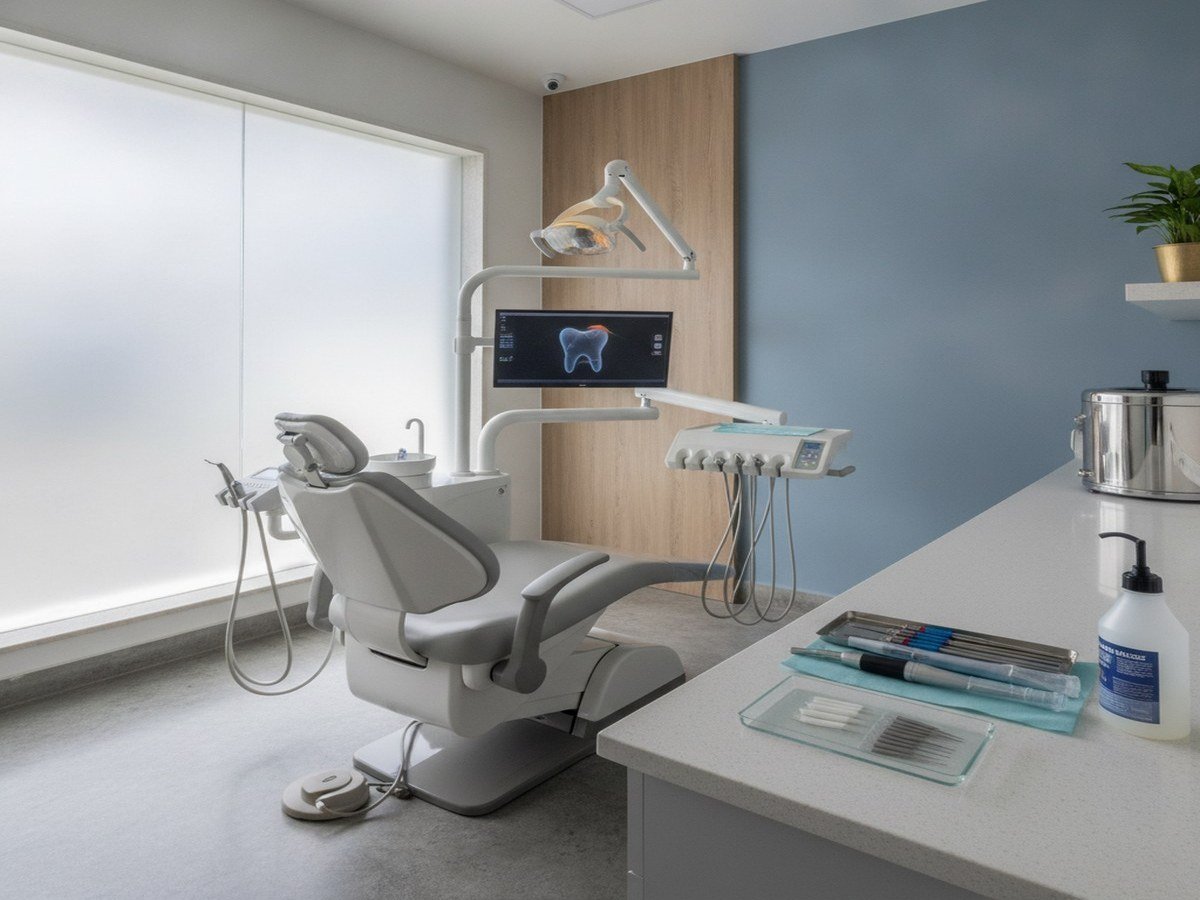
When you arrive for your appointment, the first thing you’ll notice is that this doesn’t feel like a typical dental clinic. We’ve deliberately designed our space to calm your nervous system. There’s soft lighting, a living green wall, and gentle aromatherapy. If you’d like, we offer noise-cancelling headphones so you can listen to music or simply block out the sounds that might make you anxious.
Before any treatment begins, we do a thorough consultation. I’ll examine your tooth, take digital X-rays to see exactly what we’re dealing with, and explain everything I find in plain language–not dental jargon. You’ll see your tooth on a screen. You’ll understand the problem. And crucially, you’ll know the plan before we start.
This is where trust begins.
The Numbing Process: Where Most Fear Dissolves
Here’s something that surprises a lot of first-time patients: the injection is often the part people worry about most. But we’ve got a protocol that changes that.
Before any needle touches your gum, we apply a specialized, extra-strength topical numbing gel. This sits on your gum for a minute or two, making the tissue completely numb. By the time the injection happens, you barely feel it. Many patients tell me they didn’t realize we’d already given the anesthetic until I mentioned it.
Once the numbing takes effect (usually 3–5 minutes), that whole area of your mouth is asleep. You won’t feel pain during the procedure. What you might feel is pressure or vibration, and you’ll definitely hear some sounds–but pain? No.
The Root Canal Treatment Itself: Step by Step
Once you’re numb, here’s what happens:
Isolation & Access
We place a thin rubber sheet (called a rubber dam) around your tooth. This keeps saliva out, gives us a clear, dry workspace, and actually makes the whole experience more comfortable for you because you’re not swallowing constantly.
Then we carefully open the top of your tooth to access the pulp chamber. This doesn’t hurt–remember, you’re numb–but you’ll hear the drill and feel vibration. It’s a strange sensation, but not painful.
Cleaning Out the Infection
Using specialized instruments, we gently remove all the infected pulp tissue from inside the tooth and its root canals. We use a combination of hand files and motorized instruments, working carefully to clean every millimeter of the canal system.
Throughout this process, we’re flushing the canals with antimicrobial solutions to kill any remaining bacteria. This is the core of the treatment–thorough cleaning.
Shaping & Preparing
Once everything is cleaned out, we shape the canals so they can be properly sealed. We use a technique called "crown-down" preparation, which is gentler and more precise than older methods. The whole process is methodical and careful–there’s no rushing.
Sealing the Canals
Once the canals are perfectly clean and shaped, we fill them with a biocompatible material called gutta-percha (a rubber-like substance) combined with a sealing cement. This permanently seals the canals and prevents bacteria from re-entering.
Temporary or Permanent Restoration
Finally, we seal the access hole we created. If we’re doing a single-sitting RCT, we often place a temporary restoration that day. In some cases, depending on the tooth’s condition, we might place a permanent crown or filling right away.
Why Single-Sitting RCT? The Balewadi Advantage
Traditionally, root canals were done over multiple appointments. You’d come in, we’d clean it out, place medication inside, and ask you to come back a week later to finish.
Single-sitting RCT is different. We complete the entire treatment–cleaning, shaping, and sealing–in one appointment. For many patients, this is actually less stressful because:
- You don’t have to come back and re-live the anxiety
- The tooth is fully sealed immediately, reducing the risk of re-infection
- You get closure and can move forward with your life
- There’s no temporary filling that might come loose or cause discomfort between visits
That said, single-sitting RCT requires precision, skill, and the right technology. It’s not appropriate for every tooth or every situation. During your consultation, I’ll be honest about whether your tooth is a good candidate.
What You’ll Experience During the Appointment
Let me paint a realistic picture of the sensations:
Sounds: You’ll hear the drill and the suction. It’s not silent, but with noise-cancelling headphones playing your choice of music, it becomes background noise.
Vibration: You’ll feel vibration in your jaw and head. It’s not painful, but it’s definitely there. Some patients find it oddly meditative once they know it’s not hurting them.
Pressure: Occasionally, you might feel pressure as we work inside the tooth. This is normal and not painful.
Duration: A straightforward single-sitting RCT typically takes 45 minutes to 90 minutes, depending on the tooth’s complexity. Molars take longer than front teeth. We’ll give you a realistic estimate before we start.
Comfort: You can raise your hand at any time if you need a break. We pause, you rest, and we continue. You’re in control.
Aftercare: The Week Following Your RCT
This is crucial, and I want to be very clear about it.
Immediately After Treatment
Your mouth will still be numb for 2–3 hours. Don’t chew on your lip or cheek. Stick to soft foods until the numbness wears off.
You might feel some mild tenderness or soreness in the tooth and surrounding area. This is completely normal. Your tooth has been through a procedure, and the surrounding tissues are slightly inflamed. This usually settles within 24–48 hours.
Pain Management
If you experience discomfort, over-the-counter pain relief like ibuprofen or paracetamol works well. Most patients need pain relief for only the first day or two, if at all.
If you experience severe, throbbing pain that doesn’t improve with medication, contact us immediately. This is rare, but it needs attention.
Eating & Drinking
For the first 24 hours, avoid very hot foods and drinks. Stick to lukewarm or cool options. Avoid hard, crunchy, or sticky foods for at least a week. Your tooth is temporarily more fragile until we place a permanent crown or filling.
Oral Hygiene
Continue brushing and flossing gently. Don’t avoid the treated tooth–just be gentle around it. Good oral hygiene actually speeds healing.
Follow-Up Appointments
If we placed a temporary restoration, you’ll need to come back to have it replaced with a permanent crown or filling. This is essential. A temporary restoration is just that–temporary. It won’t last long-term. We’ll give you a clear timeline for this appointment.
Common Questions I Hear from First-Time Patients
"Will it hurt?"
Not during the procedure–you’re numb. You might feel mild discomfort afterward, but it’s usually manageable and brief.
"Can I go back to work the same day?"
Absolutely. Most patients return to normal activities immediately. You might feel a bit tender, but you’re not incapacitated.
"What if the treatment doesn’t work?"
Root canal treatment has a high success rate. But occasionally, a tooth doesn’t respond as expected. If that happens, we discuss options with you–sometimes a second treatment, sometimes extraction and replacement with an implant. We’ll never leave you guessing.
"Is a root canal worse than extraction?"
No. Extraction removes your tooth entirely. A root canal saves it. Even with a crown afterward, keeping your natural tooth is almost always better than losing it. Your natural tooth functions better, looks better, and costs less long-term.
"How long will the treated tooth last?"
If properly restored with a crown and cared for with good oral hygiene, a root canal-treated tooth can last a lifetime. The tooth is no longer "alive," but it’s fully functional.
"Why does it need a crown afterward?"
A root canal-treated tooth becomes more brittle over time because it’s no longer nourished by the living pulp. A crown protects it from fracturing under biting forces. It’s like putting a protective case around something fragile.
Why We Do Things Differently Here
I want to be transparent about something: not every clinic approaches root canal treatment the way we do. Many still use older techniques, multiple appointments, and a clinical atmosphere that amplifies anxiety.
Here’s what’s different about our approach:
We prioritize your comfort from the moment you walk in. The sensory experience–the lighting, the aromatherapy, the quiet–isn’t decorative. It’s functional. A calm nervous system heals faster and experiences less pain.
We use advanced technology. Our digital imaging and modern instruments allow us to be more precise and efficient. Single-sitting RCT is only possible with the right tools and training.
We explain everything. Before, during, and after. No surprises. No jargon. Just clear, honest communication.
We respect your autonomy. You’re not a passive patient lying back while things happen to you. You’re a partner in your own care. You can pause, ask questions, and make informed decisions.
Ready to Take the Next Step?
If you’re sitting with tooth pain or sensitivity, or if you’ve been told you need a root canal, I encourage you to come in for a consultation. There’s no obligation. We’ll examine your tooth, explain what’s happening, and give you options.
Many patients tell me that the anticipation was far worse than the actual experience. Once they understood what was happening, they felt empowered rather than frightened.
You deserve to keep your natural teeth. You deserve a dental experience that respects your comfort and intelligence. That’s what we’re here to provide.
If you’re in Balewadi or nearby in Pune and you’re ready to address that tooth, reach out to us. We’re here to help.
Contact us at +91 98811 92594 or visit our clinic at Office No 102, 1st floor, The Mint, Off Baner Road, Opposite Kapil Mallhar Society, Baner, Pune. We’ll take good care of you.
Dentistry that feels like a deep breath.
See it for yourself – your first visit is a conversation, not a commitment.
Book a Visit