Denture Care for First-Time Wearers: 7 Mistakes That Damage Your New Teeth (and How to Avoid Them)
You’ve Just Got Your New Dentures. Now What?
I see this moment all the time in my practice. Someone walks out of the clinic with their new dentures, and they’re relieved, hopeful, maybe a little nervous. They’ve made a big decision, invested in their smile, and now they’re thinking: "Okay, I have these. How do I keep them working?"
That’s the right question to ask. And honestly, the first few weeks matter more than most people realize.
I’ve been practicing dentistry for over 20 years, and I’ve watched hundreds of patients either protect their dentures beautifully or accidentally damage them through simple, preventable mistakes. The good news? Most of these mistakes are easy to avoid once you know what they are.
Let me walk you through the seven biggest denture care mistakes I see, and more importantly, how to sidestep every single one of them.
Mistake 1: Sleeping in Your Dentures Every Night
This is probably the most common one I encounter. People think, "I paid for these, so I should wear them all the time." But your mouth needs rest, just like the rest of your body does.
When you sleep in your dentures, several things happen. Your gums don’t get air circulation. Bacteria and fungi can thrive in that warm, moist environment. Over time, this can lead to denture stomatitis, which is essentially a fungal infection of the tissues underneath the denture. Your gums also swell slightly at night, and constant pressure against them can accelerate bone loss, which means your dentures will fit poorly sooner than they should.
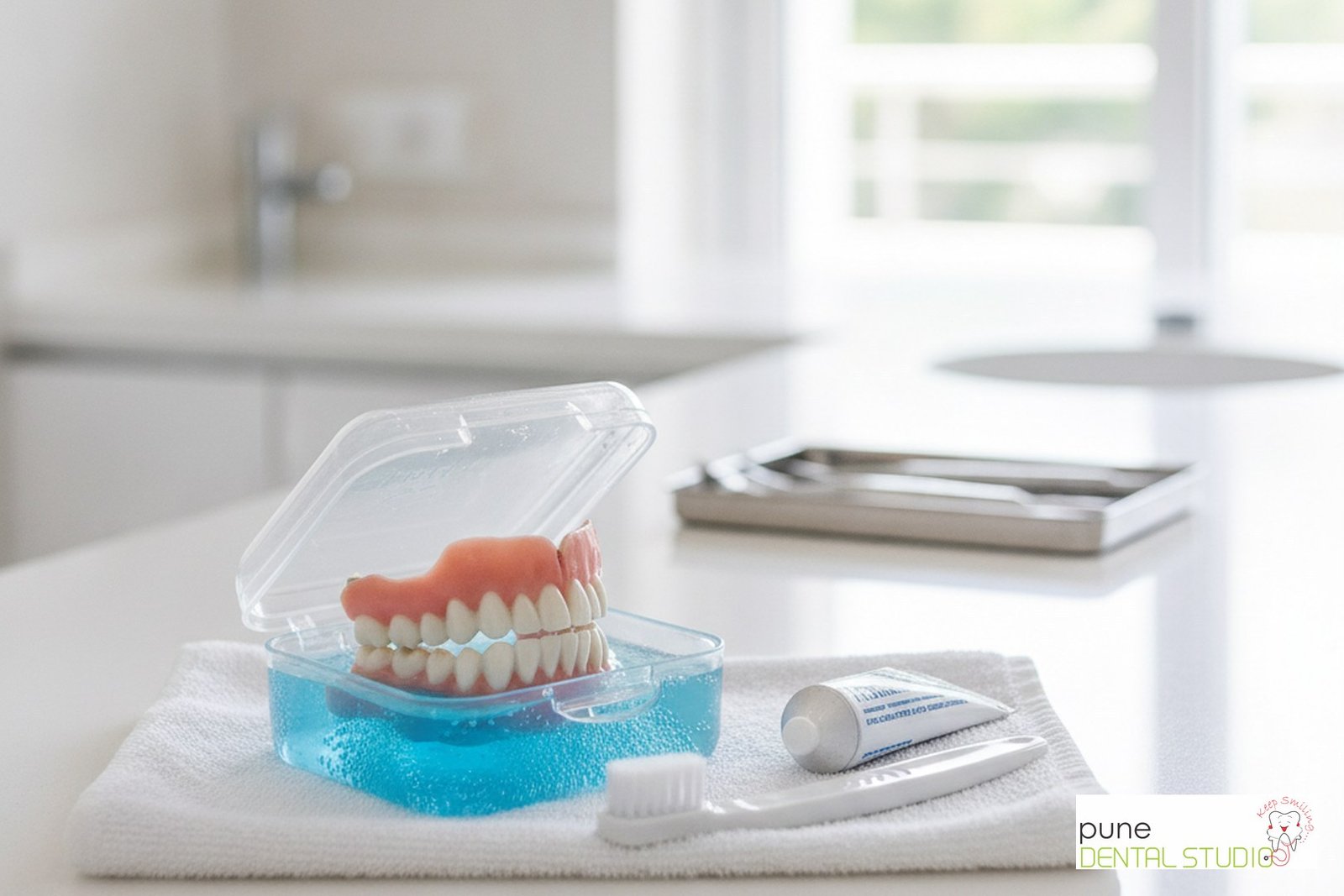
Here’s what I recommend: remove your dentures every night. Soak them in a denture cleaning solution or plain water. Your mouth will thank you. Your gums need those 6 to 8 hours of recovery time.
If you’re worried about comfort or appearance while sleeping, that’s completely understandable. But this is one area where the short-term comfort isn’t worth the long-term damage.
Mistake 2: Using Abrasive Cleaners or Toothpaste on Your Dentures
Many people treat dentures like natural teeth and use regular toothpaste to clean them. But dentures are made of acrylic or other materials that are softer than natural tooth enamel. Regular toothpaste, especially whitening formulas, can scratch and dull the surface of your dentures over time.
I’ve seen patients bring in dentures that look cloudy and worn after just a year or two, and often it’s because they’ve been scrubbing them with abrasive products.
Instead, use a soft-bristled denture brush and a denture-specific cleaning solution. If you’re at home and don’t have denture cleaner on hand, plain lukewarm water works fine. The goal is gentle cleaning, not aggressive scrubbing.
When you do use a denture cleaner, follow the instructions on the package. Most are designed to soak your dentures for a specific amount of time, usually overnight. This gives the cleaning agents time to work without you having to scrub hard.
Mistake 3: Dropping Your Dentures or Handling Them Roughly
Dentures are tougher than they look, but they’re not indestructible. I see fractures, chips, and cracks regularly, and many of them come from simple accidents.
The most common scenario: someone is cleaning their dentures over the bathroom sink, loses their grip, and watches them hit the porcelain. Or they’re in a hurry, snap them in without looking, and crack the base.
Here’s what I tell my patients: when you’re handling your dentures, especially when you’re cleaning them, do it over a towel or a basin of water. If they slip, they’ll land on something soft instead of hard tile or porcelain. It sounds simple, but it prevents so many accidents.
Also, handle them gently when you’re inserting or removing them. Don’t force them. If they feel stuck, use a small amount of denture adhesive or water to help them slide in and out smoothly.
Mistake 4: Ignoring Changes in Fit or Comfort
Your mouth changes over time. This is completely normal. Your jaw bone gradually resorbs (shrinks) after tooth loss, which means your dentures will eventually need adjustment or even replacement.
Many patients I see wait far too long to address fit problems. They think, "Oh, they’re just a little loose. I’ll get used to it." But loose dentures don’t just feel uncomfortable. They can cause sores, affect your ability to eat and speak, and accelerate bone loss even more.
If your dentures start to feel loose, slip when you’re talking or eating, or cause sore spots on your gums, that’s your signal to come back in. We can often do a reline, which adjusts the fit without replacing the entire denture. This is a routine procedure, and it keeps your dentures functional and comfortable.
I recommend seeing us for a check-up at least once a year, even if everything feels fine. Small problems are much easier to fix than big ones.
Mistake 5: Using Denture Adhesive as a Permanent Solution
Denture adhesive is useful, but I see patients using it to compensate for dentures that are actually too loose. There’s a difference between using a little adhesive for extra security and using it because your dentures don’t fit properly anymore.
If you’re using adhesive every single day and your dentures still feel unstable, that’s a sign that your dentures need adjustment. Relying on adhesive to hold loose dentures in place puts extra stress on your gums and can speed up bone loss.
Use adhesive as intended: a small amount for extra hold if you need it, not as a band-aid for a fitting problem. And always clean off the old adhesive before applying new adhesive. Buildup of old adhesive can trap bacteria and irritate your gums.
Mistake 6: Eating Hard or Sticky Foods Right Away
I hear this from patients sometimes: "I got my dentures, so now I should be able to eat everything again." But there’s a learning curve, and your mouth needs time to adjust.
Hard foods like nuts, hard candy, or tough meat can put pressure on your dentures and cause them to crack or shift. Sticky foods like caramel or taffy can pull your dentures loose or even dislodge them.
For the first few weeks, stick with soft foods: scrambled eggs, yogurt, soup, mashed vegetables, fish, ground meat. This gives your mouth time to adjust to the dentures and helps you develop the muscle control you need to keep them stable while eating.
As you get more comfortable, you can gradually add other foods back in. But even after you’ve adjusted, avoid the hardest and stickiest foods. Your dentures will last longer if you’re thoughtful about what you eat.
Mistake 7: Not Cleaning Your Mouth (Just Because You Have Dentures)
This one surprises people, but it’s important. Just because you don’t have natural teeth anymore doesn’t mean you can skip oral hygiene.
Your gums, tongue, and the roof of your mouth still need care. Bacteria and plaque can still build up. Food particles can get trapped under your dentures.
Every morning and evening, remove your dentures and gently brush your gums, tongue, and the roof of your mouth with a soft toothbrush. This removes plaque, improves circulation, and keeps your mouth healthy. It takes two minutes and makes a real difference.
Also, rinse your mouth with water after meals, especially before you put your dentures back in. This removes loose food particles and keeps your mouth fresher throughout the day.
The First Few Weeks: What to Expect
I want to be honest about the adjustment period because many patients feel discouraged if they don’t immediately feel perfect.
When you first get your dentures, they will feel strange. Your mouth has to relearn how to chew, how to speak, how to swallow. Your tongue will feel like there’s something in the way. You might drool a little more than usual. Your face might feel sore or tender, especially around the gums.
This is all normal. Most patients feel significantly more comfortable within two to four weeks. By six to eight weeks, most people have adapted remarkably well.
During this adjustment period, wear your dentures as much as you can tolerate. Yes, they feel odd. Yes, you might want to take them out. But wearing them helps your mouth adjust faster. Just make sure you take them out at night for those crucial hours of rest.
If you develop sore spots that don’t improve after a few days, or if you have pain that feels sharp or severe, contact us. Small adjustments can make a huge difference in comfort.
Denture Maintenance: The Long View
Dentures are an investment, and like any investment, they require care to maintain their value.
In my practice, I see dentures last 5 to 8 years with good care, sometimes longer. I’ve also seen dentures need replacement within a year or two because of damage or poor maintenance.
The difference usually comes down to these seven mistakes. Avoid them, and your dentures will serve you well. Make them, and you’ll be back sooner than you’d like.
Here’s the routine that works: clean your dentures daily with a denture brush and denture cleaner, soak them overnight in a cleaning solution, remove them every night to let your mouth rest, handle them gently, eat soft foods, keep your mouth clean, and come back for regular check-ups.
It’s not complicated. It’s just consistent.
FAQ: Denture Care Questions I Hear All the Time
How long do dentures last?
With proper care, most dentures last 5 to 8 years. After that, the base material can become brittle, and your jaw bone changes enough that the fit becomes less reliable. But I’ve seen well-maintained dentures last longer, and I’ve seen poorly maintained ones need replacement much sooner.
Can I use regular mouthwash with my dentures?
Yes, you can rinse your mouth with mouthwash while wearing your dentures. But don’t soak your dentures in mouthwash. Use a denture-specific soaking solution instead. Some mouthwashes can discolor or damage denture material over time.
What should I do if my dentures break?
Don’t try to glue them yourself. Contact us as soon as possible. Depending on where the break is and how severe it is, we can often repair them quickly. If the damage is extensive, replacement might be necessary.
How often should I see my dentist after getting dentures?
I recommend a check-up about two weeks after you get your dentures, then again after two months, and then at least once a year after that. More frequent visits in the beginning help catch fit problems early.
Is it normal for dentures to feel loose after a few months?
Yes, it’s very normal. Your jaw bone continues to shrink after tooth loss, which means your dentures will gradually become looser. This is why regular check-ups matter. A reline can restore the fit without replacing the entire denture.
Getting Started: Your Next Step
If you’re thinking about dentures or you’ve just gotten them and want to make sure you’re caring for them properly, I’d love to talk with you about what you’re experiencing.
Dentures are a big step, and the first few weeks can feel uncertain. But with the right information and support, most people adapt beautifully and feel genuinely grateful for their smile again.
We’re here at Pune Dental Studio in Baner, and we specialize in dentures and full mouth rehabilitation. If you have questions about your dentures, concerns about fit or comfort, or you’re considering dentures and want to understand what to expect, reach out.
You can call us at +91 98811 92594, WhatsApp us, or visit our website at punedentalstudio.com. We’re open Monday to Saturday, 9:30 AM to 1 PM and 5 PM to 9 PM, and by appointment on Sundays.
Your smile matters. Let’s make sure your dentures work as hard as you do.
<div data-gs-seal="1" style="display:flex;flex-wrap:wrap;align-items:center;gap:0 16px;margin:28px 0 0;border-radius:16px;padding:18px;color:#fff;background-color:#0B1220;background:radial-gradient(120% 140% at 0% 0%,#312E81 0%,#0B1220 55%);font-family:Inter,Arial,sans-serif;line-height:1.4"><div style="flex:none;width:58px;height:58px;border-radius:50%;background:#0B1220;border:3px solid #4F46E5;margin:0 0 8px 0;box-shadow:0 0 24px rgba(6,182,212.5)"><div style="width:20px;height:20px;margin:14px auto 0;border-radius:50%;border:5px solid #22D3EE"><div style="width:10px;height:10px;margin:5px auto 0;border-radius:50%;background:#4F46E5"></div></div></div><div style="flex:1 1 260px;min-width:0"><div style="font-size:18px;font-weight:800;line-height:1.3;color:#A5B4FC">Grown with Groundswell</div><div style="margin:4px 0 6px;font-size:13.5px;line-height:1.5;color:#CBD5E1">This article was written for <b style="color:#fff">Pune Dental Studio</b> with Groundswell.</div></div><div style="flex:none;margin:10px 0 0"><a href="https://getgroundswell.in" rel="nofollow sponsored" target="_blank" style="display:inline-block;color:#fff;border:1px solid #64748B;border-radius:999px;padding:8px 12px;font-size:12.5px;font-weight:700;line-height:1.4;text-decoration:none;white-space:nowrap">How we check →</a></div></div>
Dentistry that feels like a deep breath.
See it for yourself – your first visit is a conversation, not a commitment.
Book a Visit