
Endodontics: A Complete Guide to Root Canal Treatment and Tooth Saving
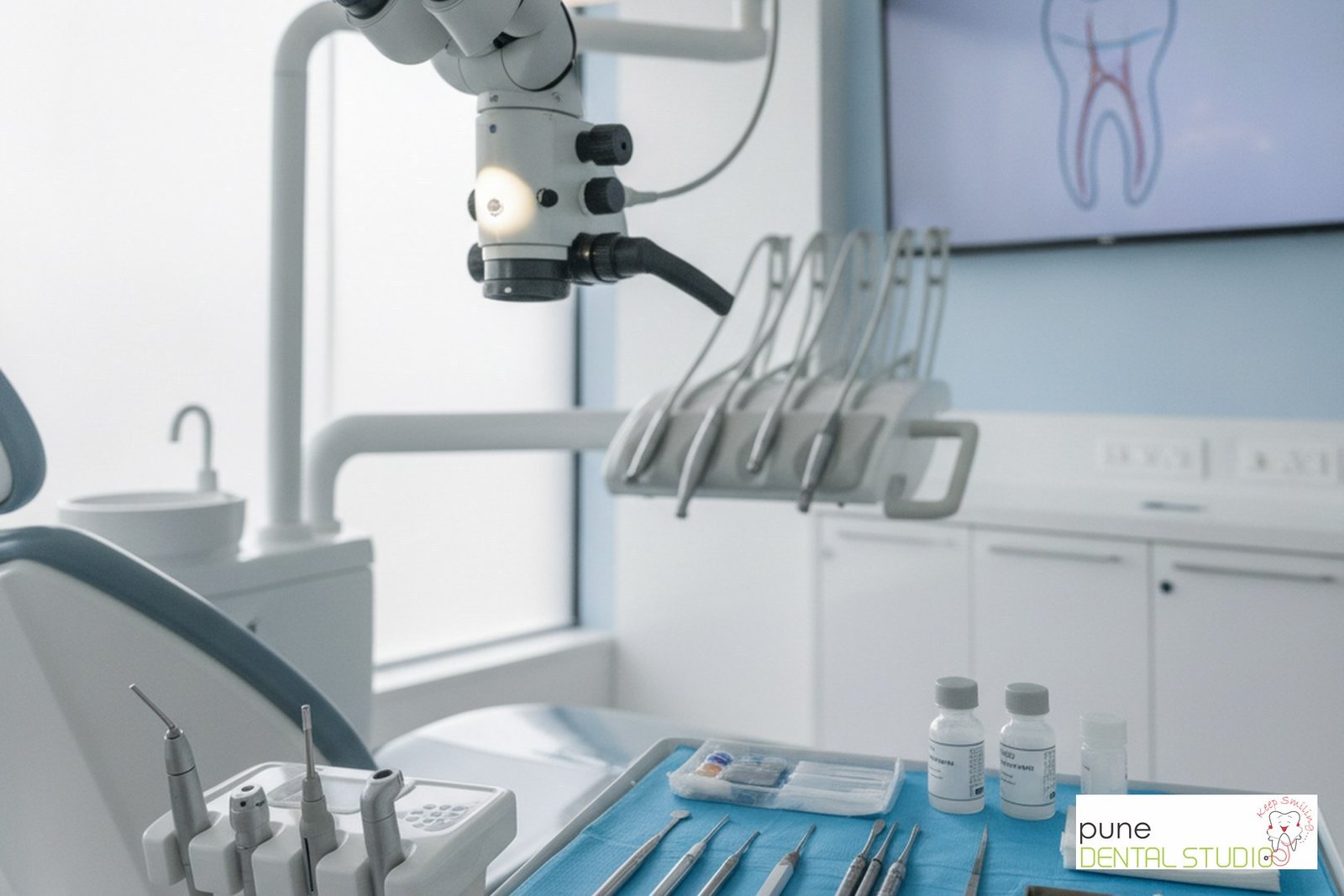
When Your Tooth Sends an SOS
Most people walk into my chair with the same worry I’ve heard hundreds of times: "My tooth is throbbing, and I’m terrified you’re going to tell me I need a root canal." That anxiety is completely valid. The word "root canal" has become shorthand for "the worst dental experience ever." But here’s what I’ve learned from completing thousands of them over my 20+ years of practice: the anticipation is almost always worse than the reality.
I’ve seen patients walk in terrified and walk out relieved. And here’s what I’ve noticed: patients who get their root canal done feel a weight lift. That’s because endodontics, which is the branch of dentistry that deals with the inside of your tooth, isn’t about pain. It’s about stopping pain.
Let me walk you through what endodontics actually is, why you might need it, and what to expect if you do.
What Is Endodontics, Really?
Endodontics is the treatment of the inside of your tooth. Inside every tooth, beneath the hard outer layer of enamel and the middle layer of dentin, is a space filled with soft tissue called the pulp. The pulp contains nerves, blood vessels, and connective tissue. It’s what kept your tooth alive and growing when you were young.
Once your tooth is fully grown, the pulp isn’t strictly necessary for the tooth to function. Your tooth can live on perfectly well without it, nourished by the tissues around it.
But when the pulp gets infected or inflamed, that’s when you need endodontic treatment.
Why Does the Pulp Get Infected?
Here are the most common reasons I see in my practice:
Deep decay. A cavity that’s been ignored long enough will eventually reach the pulp. This is why I always tell patients: a small filling now beats a root canal later.
Trauma or injury. A tooth that’s been knocked, cracked, or chipped can develop problems months or even years later. The injury damages the blood vessels inside, and the tissue dies.
Repeated dental work. Sometimes a tooth that’s had multiple fillings or crowns over the years develops pulp inflammation simply from the cumulative stress and heat of the procedures.
Gum disease. Severe periodontal disease can allow bacteria to travel down into the root system.
Cracked or chipped teeth. A crack that looks small on the surface can extend deep into the tooth, exposing the pulp to bacteria.
The key thing to understand is this: infection inside a tooth doesn’t heal on its own. It gets worse. And the longer you wait, the more complicated the treatment becomes.
What Does Endodontic Treatment Actually Do?
A root canal is the most common endodontic procedure. Here’s what happens:
The dentist removes the infected or inflamed pulp from inside the tooth. This stops the source of the pain and infection. Then the space is cleaned, shaped, and filled with a biocompatible material to seal it permanently. Finally, the tooth is restored with a filling or crown to protect it and restore its function.
That’s it. The goal is simple: save the tooth.
Single-Sitting vs. Multiple Visits: What’s the Difference?
I’ve been practicing dentistry for over 20 years, and I’ve completed thousands of root canals. One of the most common questions I hear is: "Can you do this in one sitting, or do I need to come back?"
The answer is: it depends on the tooth and the situation.
Single-sitting root canals are completed in one appointment. The entire process, from diagnosis to filling, happens in one session. Clinical studies show that a single-visit root canal has a long-term success rate comparable to traditional multi-visit treatments, typically ranging between 90% and 99% when executed correctly by an experienced endodontist.
In my practice, I complete most root canals in a single sitting. Here’s why this works:
Modern technology like digital X-rays, electronic apex locators, and automated rotary endodontic tools allow me to map, clean, and fill the root canals with extreme precision in under an hour. There’s no risk of bacterial recontamination between appointments because the tooth is sealed permanently in one day. And for patients with dental anxiety, completing the entire process in one session minimizes stress and avoids the dread of returning.
Multiple-visit root canals are sometimes necessary, particularly when there’s active infection, swelling, or continuous drainage. In these cases, I place an interim medication like calcium hydroxide between visits to neutralise the infection before permanently sealing the tooth. This approach gives the tooth time to heal and reduces the risk of complications.
According to the latest clinician survey data, for irreversible pulpitis (a live, inflamed nerve), 92.4% of cases are completed in a single visit. For necrotic teeth (dead nerve with infection), 74.9% are completed in one visit. But when swelling or continuous drainage is present, over 92% of clinicians switch to a multiple-visit protocol.
The success rates are nearly identical. Research shows single-visit RCT success at 92%, compared to 90% for multiple-visit RCT, when evaluated at 6 to 12 months post-treatment. Post-operative pain is actually lower with single-visit treatment: 20% for single-visit vs. 35% for multiple-visit, because the tooth is only traumatised and anaesthetised once.
How to Know If You Need Endodontic Treatment
I see patients come in all the time with swollen cheeks, jaw pain, or difficulty opening their mouth. Sometimes they know exactly what’s wrong. Sometimes they have no idea.
Here are the signs I look for:
Severe pain when chewing or applying pressure. This is the most common symptom. The pain might be sharp and immediate, or it might be a dull ache that comes and goes.
Prolonged sensitivity to hot or cold. If a tooth hurts when you drink hot coffee and the pain lingers even after the stimulus is gone, that’s a red flag.
Discolouration or darkening of the tooth. Sometimes the pulp dies and the tooth changes colour. It might look grey or brown.
Swelling and tenderness in nearby gums. Infection inside the tooth can cause the gum above the root to swell. You might notice a small pimple-like bump on the gum.
No symptoms at all. This is the tricky one. Sometimes I discover pulp damage during a routine X-ray, and the patient had no idea anything was wrong.
Here’s something I’ve learned: if you notice any of these signs, don’t wait. The longer you delay, the more complex the treatment becomes, and the higher the risk that the tooth can’t be saved.
What to Expect During the Procedure
I’ve been practicing dentistry since 2006, and I still remember my own nervousness before my first dental procedure. I get it. The unknown is scary.
Here’s what actually happens:
First, I take digital X-rays to see the shape of the root canals and assess the extent of the infection. Then I numb the tooth thoroughly. This is where our "numbing before the numbing" protocol comes in. Before I inject the anaesthetic, I apply a specialised, extra-strength topical numbing gel. This makes the injection virtually unnoticeable.
Once the tooth is numb, I isolate it with a rubber dam. This keeps the area dry and prevents you from swallowing any of the materials I’m using.
Then I access the pulp chamber, which is the space inside the tooth. I use small instruments called files to carefully remove the infected or inflamed pulp. I work from the crown of the tooth down to the tip of the root, making sure I remove all the tissue.
As I work, I flush the canals with a disinfecting solution to kill any remaining bacteria. I use an electronic apex locator to make sure I’m cleaning all the way to the end of the root, but not beyond it.
Once the canals are clean, I shape them so they can be filled. Then I fill them with a biocompatible material called gutta-percha, which is a rubber-like substance that seals the canals permanently.
Finally, I place a temporary or permanent filling to seal the access hole.
The whole process takes about 30 to 45 minutes for a single-sitting root canal. Most of my patients are surprised at how little pain they experience during the procedure itself.
After Your Root Canal: What’s Normal?
I hear this question almost every single day from patients, and honestly, it’s one of the most important things to understand if you’ve just had endodontic treatment: "What should I expect now?"
Here’s what I tell people:
Some sensitivity is normal. Your tooth has been through a procedure, and the area around the root has been irritated. You might feel tenderness when biting down, or sensitivity to pressure. This usually settles within a few days.
Over-the-counter pain relief helps. If you’re uncomfortable, ibuprofen or paracetamol work well. Most of my patients find they only need pain relief for the first day or two.
Avoid chewing on that side for a few days. Give the tooth time to settle. Once it’s restored with a crown or permanent filling, you can use it normally.
The tooth might feel slightly different. Because the nerve is gone, the tooth no longer has sensation. It won’t feel pain if something goes wrong inside it. This is why a crown is so important. It protects the tooth from re-infection and fracture.
Some teeth flare up. About 5% of single-visit root canals and 3% of multiple-visit root canals develop an acute exacerbation, which means the area becomes inflamed or painful after the procedure. This is usually manageable with pain relief and resolves within a few days. If it doesn’t, contact your dentist.
One thing I’ve noticed over the years: patients feel most confident when they know exactly what to expect. If you experience severe pain that doesn’t respond to over-the-counter medication, or if the swelling gets worse instead of better, reach out to me. These are rare, but they need attention.
Why Save the Tooth? Why Not Just Extract It?
I see patients come in all the time thinking extraction is the simpler, cheaper option. And I understand that logic. But here’s what I’ve learned from watching hundreds of patients over my 20+ years of practice: losing a tooth costs you far more than saving it.
When you lose a tooth, the bone underneath it starts to resorb. It shrinks. This changes the shape of your face, affects your bite, and makes it harder to chew. You lose nutritional options. And if you want to replace the tooth later with an implant or bridge, you might need bone grafting, which adds time and cost.
I’ve seen patients come in thinking they’re saving money by skipping a root canal and choosing extraction, only to end up needing more complex surgery, bone grafts, and eventually an implant that costs far more than the root canal would have.
Your natural tooth, even with a root canal, is almost always the best option. It’s stronger, more functional, and more natural than any replacement.
Root Canal Myths, Debunked
Myth: Root canals are extremely painful.
Reality: A root canal relieves pain. The pain you feel before the procedure is from the infected pulp. Once that’s removed, the pain stops. During the procedure, you’re numb, so you shouldn’t feel pain, only pressure and vibration.
Myth: I can just get antibiotics instead.
Reality: Antibiotics can’t reach the inside of a tooth. Once the pulp is infected, antibiotics won’t help. The only way to stop the infection is to remove the infected tissue.
Myth: The tooth will just get infected again.
Reality: If the root canal is done correctly and the tooth is properly restored, re-infection is rare. In my practice, I see re-infection rates below 10%, and most of those are because the tooth wasn’t restored with a crown afterwards.
Myth: I should wait and see if it gets better on its own.
Reality: Pulp infections don’t heal on their own. They get worse. The longer you wait, the more damage occurs, and the harder the treatment becomes.
When a Single-Sitting Root Canal Might Not Be Right
Not every tooth is a candidate for single-sitting treatment. I won’t do a single-sitting root canal if:
There’s active pus or swelling. If there’s an abscess or significant fluid drainage, I need to place an interim medication to neutralise the infection before permanently sealing the tooth.
The tooth has complex anatomy. Highly curved canals, calcified blockages, or extra hidden root branches need extra time and care. Rushing through these cases increases the risk of complications.
You have a compromised immune system. If you’re immunocompromised, a multiple-visit approach with interim medication is safer.
The tooth has been previously treated. A root canal retreatment (redo) is more complex and often requires multiple visits.
In these cases, I recommend a multiple-visit approach. It takes longer, but it’s the safer choice.
Aftercare: Keeping Your Root Canal Healthy
Once your root canal is done, your job is to protect it.
Get a crown. This is critical. A tooth that’s had a root canal is more brittle because it’s no longer nourished by the pulp. A crown protects it from fracture and re-infection.
Maintain good oral hygiene. Brush twice a day, floss daily, and see me for regular check-ups. A root canal can last a lifetime if you take care of it.
Avoid chewing on hard objects. No chewing ice, hard candy, or using your teeth as tools.
Don’t smoke. I’ve seen smoking dramatically reduce implant success rates, and it also compromises healing after endodontic treatment.
In my experience, crowns and bridges last far longer than the warranty period if you treat them well. I’ve seen patients keep their root-canal-treated teeth for 20+ years without issues.
The Bottom Line
Endodontics isn’t about pain. It’s about saving your tooth. I’ve been practicing dentistry for over 20 years, and I’ve watched firsthand how much difference early intervention makes.
If you’re experiencing tooth pain or suspect you might need endodontic treatment, don’t wait. The sooner we address it, the simpler the treatment and the better the outcome.
Here at Pune Dental Studio in Baner, we offer single-sitting root canal treatments starting from ₹8,000 to ₹10,000 (about US$80 to US$100) per tooth. We use modern technology, a calm environment, and our "numbing before the numbing" protocol to make the experience as comfortable as possible.
Root canal retreatment (redo cases) is also available at the same price range, and we can usually complete it in one sitting.
FAQ
Q: How long does a root canal take?
A: A single-sitting root canal typically takes 30 to 45 minutes. Multiple-visit treatments vary depending on the complexity and the number of appointments needed.
Q: Will I feel pain during the procedure?
A: No. The tooth is numbed before we start. You might feel pressure or vibration, but not pain. If you do feel pain, let me know immediately, and I’ll numb you more.
Q: How long will my root canal last?
A: If it’s done correctly and the tooth is restored with a crown, a root canal can last a lifetime. I’ve seen patients keep their treated teeth for 20+ years or longer.
Q: Can I drive home after a root canal?
A: Yes. The anaesthetic wears off within a few hours. You can drive, work, and go about your day normally.
Q: Do I need a crown after a root canal?
A: Yes. A root canal-treated tooth is more brittle and needs protection. A crown strengthens it and prevents re-infection.
Q: Is a single-sitting root canal safe?
A: Yes, provided it’s performed on the right patient and the right tooth by an experienced dentist. Success rates are comparable to multiple-visit treatments.
Let’s Talk About Your Tooth
If you’re worried about tooth pain or think you might need endodontic treatment, I’d like to help. Over my 20+ years of practice, I’ve learned that the patients who get the best results are the ones who found a dentist they trust.
We’re here in Baner, and we specialise in making dental care comfortable, transparent, and effective. We offer digital consultations, 3D scanning, and a calm environment designed for people who are anxious about dental work.
Reach out to us at +91 98811 92594 or email smile@punedentalstudio.com. You can also book a visit at punedentalstudio.com. We’re open Monday to Saturday, 9:30 AM to 1 PM and 5 PM to 9 PM, and by appointment on Sundays.
Let’s save your tooth together.
Dentistry that feels like a deep breath.
See it for yourself – your first visit is a conversation, not a commitment.
Book a Visit