
My Child Won't Stop Grinding Their Teeth at Night – Should I Worry?
The Question I Hear Almost Every Week
Your child is asleep, and you hear it: a grinding, crunching sound coming from their mouth. It’s unsettling. You wonder if something is wrong. Is this normal? Will their teeth be damaged? Should you rush to a dentist, or is this just a phase?
I hear this worry constantly, and I want you to know right away: you’re not overreacting by noticing it. But you also don’t need to panic. Let me walk you through what’s actually happening, what you should watch for, and what we can do about it.
What Is Teeth Grinding in Children?
Teeth grinding, or bruxism, is when your child clenches and grinds their teeth, usually at night during sleep. It’s incredibly common. Many children go through phases of grinding, and most of the time, it resolves on its own without any lasting damage.
The grinding sound happens because the jaw muscles are contracting involuntarily. Your child probably isn’t aware it’s happening, which is why it’s often a parent who notices first.
Why Do Children Grind Their Teeth?
There’s no single cause, and that’s actually reassuring. Here are the most common reasons I see in my practice:
Sleep Stage Transitions
Children’s sleep cycles are different from adults’. As they move between deep sleep and lighter sleep stages, their jaw muscles can tense up. This is especially common in younger children, whose nervous systems are still developing.
Stress and Anxiety
Children feel stress too, even if they can’t always name it. Starting a new school, changes at home, or even excitement about an upcoming event can trigger grinding. I’ve noticed that kids often grind more during stressful periods.
Misaligned Bite
If your child’s upper and lower teeth don’t meet evenly, the jaw may work harder to find a comfortable position, sometimes resulting in grinding. This is something we can check during a regular dental visit.
Hyperactivity or Sleep Disorders
Children with ADHD or sleep apnea may grind more frequently. If your child also snores loudly, pauses in breathing, or seems very restless at night, it’s worth mentioning to your paediatrician.
Teething (In Younger Children)
If your child is between ages 3 and 7 and losing baby teeth, some grinding is completely normal as their jaw adjusts to new teeth coming in.
Caffeine or Certain Medications
Less common, but stimulants or certain medications can increase grinding. If your child takes any regular medication, mention the grinding to their doctor.
When Should You Actually Worry?
Here’s the practical part: most childhood bruxism is harmless and self-limiting. But there are signs that warrant a dental check-up.
Signs to Watch For
Visible tooth wear. If you notice your child’s teeth are becoming flatter or shorter, or if the edges look worn down, that’s a signal to see us. Baby teeth are softer than adult teeth, so they can show wear more quickly.
Jaw pain or complaints. If your child says their jaw hurts, especially in the morning, or if they have trouble opening their mouth wide, we need to evaluate their bite and jaw alignment.
Frequent headaches. Grinding can create tension in the muscles around the head and neck. If your child wakes up with headaches several times a week, grinding might be a factor.
Broken or chipped teeth. If a tooth has cracked or chipped and you suspect grinding, bring them in. We’ll assess the damage and talk about prevention.
Grinding that gets worse over time. If you notice the grinding is becoming louder or more frequent, or if it’s been going on for more than a few months without improvement, that’s worth investigating.
Sleep disturbance. If the grinding is so loud it’s waking your child or affecting their sleep quality, we should address it.
What Happens at the Dental Visit
When you bring your child in, I’ll do a few things:
First, I’ll look at their teeth for signs of wear, and I’ll check how their bite comes together. I’ll ask you about when the grinding happens, whether they seem stressed, and if there are any other symptoms.
I’ll also take a gentle look at their jaw alignment and listen for any clicking or popping sounds when they open and close their mouth.
Most of the time, this simple examination is all we need. For young children with minor grinding and no visible damage, we often just monitor and reassure parents that it’s likely to resolve naturally.
What Can You Do at Home
While most childhood bruxism doesn’t require treatment, these steps can help:
Reduce Stress Before Bed
Establish a calm wind-down routine. Dim the lights 30 minutes before sleep. Avoid screens, which can overstimulate. Read a story, do some gentle stretching, or listen to calm music.
Keep a Regular Sleep Schedule
Children who are well-rested grind less. Aim for consistent bedtimes and wake times, even on weekends.
Warm Compress
If your child complains of jaw tension, a warm (not hot) compress on the jaw for 10-15 minutes before bed can relax the muscles.
Avoid Stimulants
Limit sugary snacks and drinks, especially in the afternoon and evening. Caffeine is rare in children’s diets, but check labels on chocolate and fizzy drinks.
Address Allergies or Congestion
Children who can’t breathe easily through their nose often grind more. If your child has seasonal allergies or chronic congestion, treating that can sometimes reduce grinding.
Talk About Feelings
Even young children can learn to name what they’re feeling. Simple conversations about their day, worries, or exciting things coming up can help them process stress.
When We Recommend a Night Guard
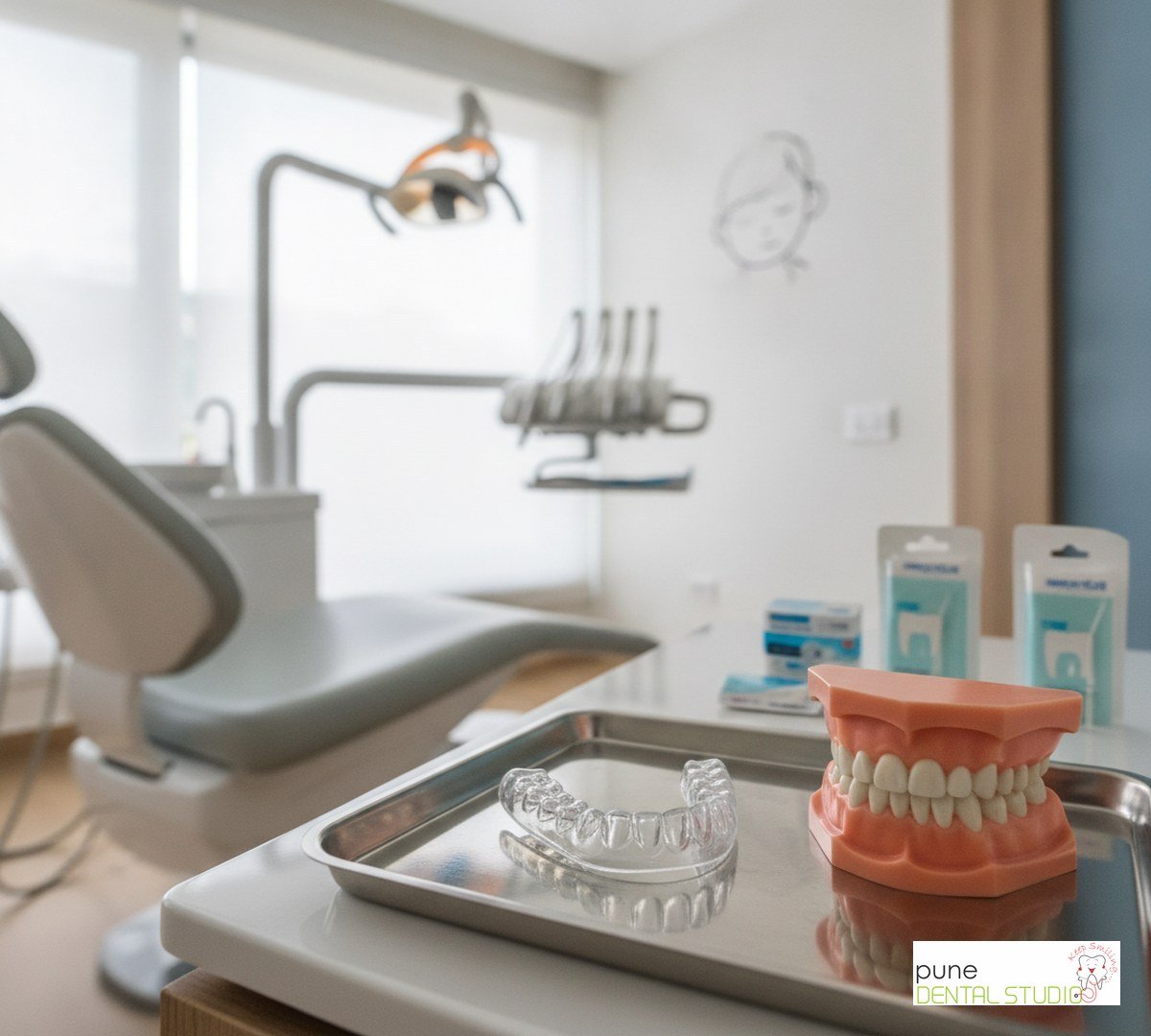
For most children, a night guard isn’t necessary. But if your child has significant tooth wear, jaw pain, or grinding that’s clearly affecting their sleep or causing damage, we may recommend one.
A custom-made night guard for children is different from an adult’s. It’s gentler, smaller, and designed to protect baby teeth while they’re still present. The price at our clinic for a custom-made night guard is around Rs. 4,000 (about US$40).
The guard works by creating a barrier between the upper and lower teeth, reducing the sound and the force of grinding. It also reminds the jaw to relax into a better position.
Children often adapt to wearing a guard quickly, especially if we explain it in a way that feels empowering rather than scary. I tell kids it’s like a protective shield for their teeth, something that helps them sleep better.
The Role of Bite Alignment
If we discover that your child’s bite is misaligned, that’s information we can use. Sometimes, gentle orthodontic intervention in childhood can prevent grinding from becoming a long-term habit.
This isn’t about jumping into braces at age 6. It’s about early assessment. If there are significant bite issues, we might recommend monitoring now and possibly early intervention later, around age 8 or 9, when permanent teeth start coming in.
What About Stress and Anxiety?
If your child is grinding and you suspect stress is a factor, that’s worth addressing holistically. Talk to their school, their paediatrician, or a child psychologist if needed. Dental treatment can protect the teeth, but addressing the root cause helps the whole child.
I’ve seen children grind less once their parents understood what was worrying them and made small changes at home. Sometimes it’s as simple as reducing after-school activities, spending more one-on-one time, or creating a more predictable routine.
The Good News
Most children stop grinding naturally by their early teens. Baby teeth are temporary anyway, so even if there’s some wear, it doesn’t affect their adult teeth. And adult teeth are stronger and more resistant to grinding damage.
The key is catching any real problems early, staying calm, and supporting your child’s overall wellbeing.
FAQ
Q: Can grinding damage my child’s adult teeth?
A: Grinding on baby teeth is usually not a concern for permanent teeth. However, if grinding is severe and continues into the teenage years, it can affect developing adult teeth. This is why early monitoring matters.
Q: Is teeth grinding a sign of a serious problem?
A: In most cases, no. It’s a common, self-limiting behaviour. But it can be a sign of stress, sleep issues, or bite problems, which is why we check.
Q: Should I tell my child to stop grinding?
A: No. Your child isn’t doing it on purpose, so reminding them won’t help and might create anxiety. Instead, focus on creating a calm sleep environment.
Q: How long does childhood bruxism last?
A: It varies. Some children grind for a few weeks or months. Others grind on and off for a few years. Most stop by their early teens.
Q: Do I need to see a specialist?
A: Not usually. A general dentist can assess grinding and recommend treatment if needed. We only refer to a specialist if there are complex bite issues or if grinding is part of a larger sleep or neurological concern.
Q: Can diet affect grinding?
A: Indirectly, yes. A diet high in sugar and stimulants can increase overall tension and sleep disruption, which may worsen grinding. A balanced diet and good sleep hygiene help.
Let’s Get Your Child Checked
If you’ve noticed your child grinding their teeth, the best first step is a gentle dental check-up. I’ll look at their teeth, assess their bite, and give you a clear picture of what’s happening and what, if anything, needs to be done.
Most of the time, we’ll monitor and reassure you. Sometimes, we’ll recommend simple steps at home. And occasionally, if there’s real damage or significant symptoms, we’ll talk about protection like a night guard.
Your child’s dental health matters, and so does your peace of mind. If you’d like to bring them in for a consultation, you can reach us at +91 98811 92594 or WhatsApp the same number. We’re here in Baner, and we’ve created a calm, kid-friendly space where children feel comfortable and safe.
Let’s make sure your child’s smile stays healthy and strong.
Dentistry that feels like a deep breath.
See it for yourself – your first visit is a conversation, not a commitment.
Book a Visit