
Conventional Metal & Ceramic Braces Cost in Balewadi: An Honest Price Guide
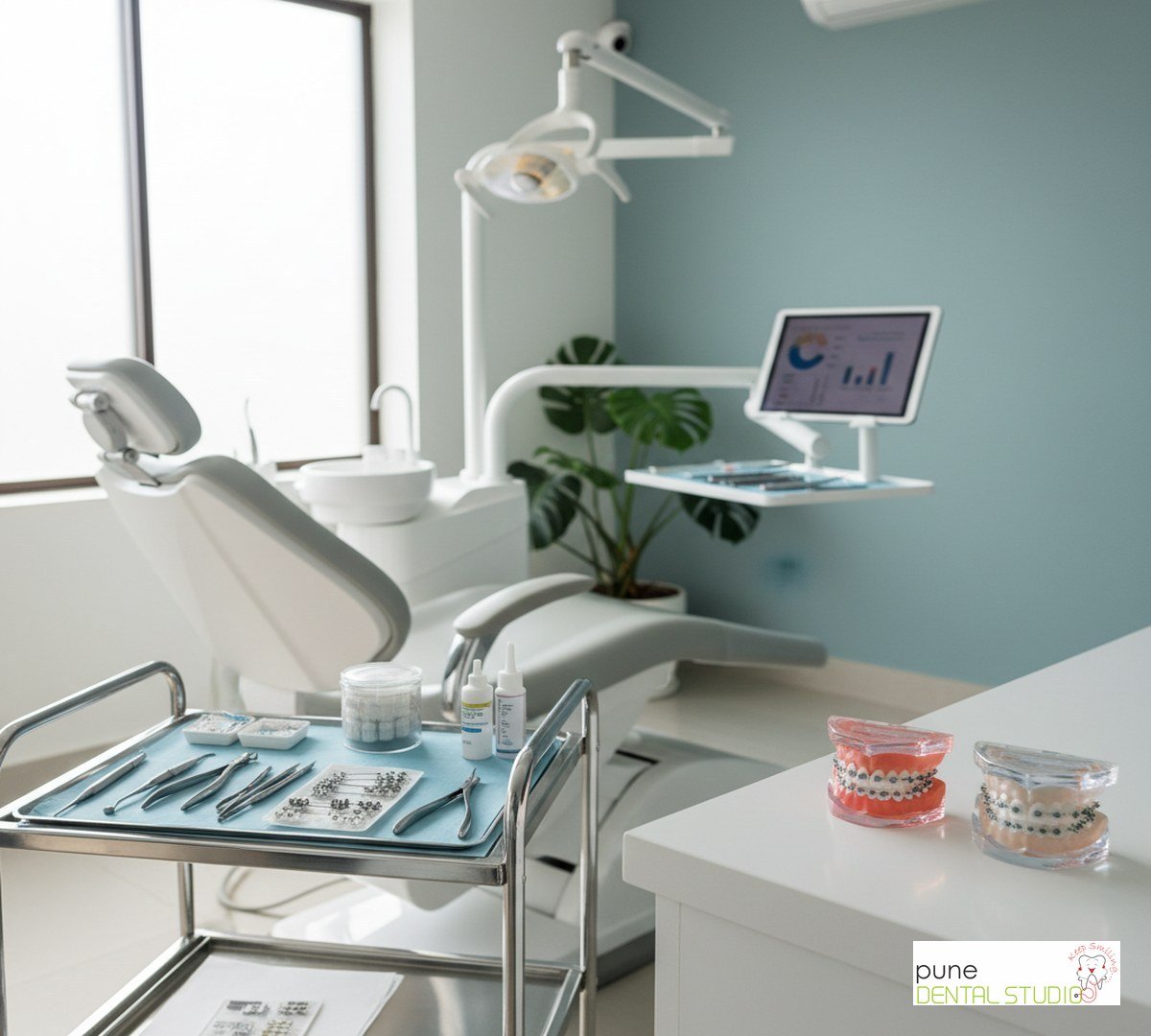
You’re thinking about braces. And the first thing on your mind is probably: how much will this actually cost?
I get it. Orthodontic treatment feels like a big commitment–not just in terms of time, but financially. You’ve probably seen wildly different prices online, heard conflicting advice from friends, and maybe felt a bit lost trying to figure out what’s real and what’s just marketing noise.
That’s exactly why I wanted to write this. After nearly two decades of practicing dentistry here in Baner, I’ve had countless conversations with patients who felt anxious about braces–not because of the treatment itself, but because they didn’t understand the pricing. So let me walk you through what conventional metal and ceramic braces actually cost, what goes into that price, and what you should realistically expect.
What You’re Actually Paying For
When you see a price for braces, it’s not just "brackets and wires." That number represents a lot of careful work happening behind the scenes.
First, there’s the initial consultation and diagnosis. This isn’t a quick glance–it involves a detailed examination, digital 3D scanning of your teeth and jaw, and a thorough discussion of your goals. We use live 3D imaging so you can actually see your own mouth mapped out on a screen. This helps us create a treatment plan that’s tailored specifically to you, not a generic approach.
Then there’s the actual placement of the braces–the bonding of brackets, the threading of wires, and the careful calibration needed to set your teeth on the right path. This appointment typically takes 60 to 90 minutes and requires precision and patience.
But here’s the thing that many clinics don’t emphasize: the real work happens in the follow-up visits. You’ll come back every 4 to 6 weeks for adjustments. Each visit involves checking how your teeth are moving, tightening or changing wires, and making small corrections. These appointments are shorter–usually 20 to 30 minutes–but they’re crucial. The quality of these adjustments directly affects how straight your teeth end up and how long treatment takes.
Finally, there’s the removal appointment and the retainer phase. We’ll carefully remove the brackets, clean your teeth, and fit you with a retainer to keep everything in place. This is non-negotiable if you want your smile to stay straight.
All of this–the planning, the placement, the adjustments, the removal, and the retainers–is what you’re paying for.
Metal Braces vs. Ceramic Braces: The Real Difference in Cost
You’ve probably heard that ceramic braces cost more than metal ones. That’s true, and there are good reasons why.
Metal braces are the traditional option. They’re durable, they work reliably, and they’re the most affordable choice. The brackets are made of stainless steel, and they’re small and efficient. Because they’ve been around for decades, the materials are well-established and cost-effective to manufacture.
Ceramic braces, on the other hand, use tooth-colored or clear brackets made from ceramic material. They blend in much better with your teeth, which is why many adults prefer them–the aesthetic difference is genuinely noticeable. The trade-off is that ceramic is more fragile than metal, so the brackets need to be handled more carefully during adjustments. The material itself costs more, and the treatment sometimes takes slightly longer because adjustments need to be gentler.
Here’s what I tell patients: if you’re self-conscious about the appearance of braces and you can comfortably afford ceramic, they’re worth it. But if budget is a concern, metal braces work beautifully and will give you the same end result. There’s no "better" option–just the one that fits your priorities and comfort level.
What Goes Into Your Treatment Timeline
The length of your treatment affects the total cost because it determines how many adjustment visits you’ll need.
Most conventional braces treatment takes between 18 and 36 months, depending on how much movement your teeth need. Mild cases might be done in 18 months; more complex cases can take 3 years or longer. Each adjustment visit is typically spaced 4 to 6 weeks apart, so you’re looking at somewhere between 9 and 18 appointments over the course of treatment.
Why does this matter for cost? Because some clinics include all adjustments in one upfront fee, while others charge per visit. We practice transparent, upfront pricing–you’ll know exactly what you’re paying before we even start. This means no surprise bills halfway through treatment.
One thing I always emphasize: rushing treatment to save money doesn’t actually save you money. It can lead to relapse (your teeth shifting back), which means you might need treatment again. Slower, steady movement creates results that last.
Breaking Down the Numbers: What to Expect
I want to be honest with you about pricing without naming specific figures that might change or vary based on your individual case. Here’s why: every mouth is different. The complexity of your bite, the amount of crowding, whether you need extractions or other preparatory work–all of this affects the final cost.
What I can tell you is this: conventional braces (both metal and ceramic) are generally more affordable than clear aligners. Metal braces are the most budget-friendly option. Ceramic braces typically cost more than metal but less than invisible aligners. And the price range in Baner and surrounding areas is fairly consistent with other major cities in India, though it varies by clinic based on their expertise, technology, and aftercare.
When you come in for a consultation, we’ll give you a detailed, itemized treatment plan in writing. You’ll see exactly what’s included, what the timeline looks like, and what the total investment is. No surprises, no hidden fees, no pressure to upgrade to something you don’t need.
What’s Included vs. What Isn’t
This is where a lot of confusion happens, so let me be clear.
Your braces cost typically includes:
- Initial consultation, examination, and 3D digital scanning
- The brackets and wires themselves
- Placement of the braces
- All adjustment visits throughout treatment
- Removal of the braces
- Basic retainers (usually one fixed retainer and one removable retainer)
What’s usually not included:
- Replacement retainers if you lose or damage yours (retainers wear out and need replacement every few years)
- Tooth-colored or cosmetic retainer upgrades
- Extractions, if they’re needed as part of your treatment plan
- Any other dental work (fillings, cleaning, etc.) that happens alongside your orthodontics
I always recommend asking about this upfront. We’re very clear about what’s covered, and if you need additional work, we’ll discuss that separately with its own transparent pricing.
Why Price Alone Isn’t the Whole Story
I want to gently push back on the idea that you should just shop for the cheapest braces option.
Orthodontics is a long-term commitment. You’re going to spend 18 to 36 months in this relationship with your dentist. The quality of your adjustments, the care you receive, and the attention to detail during treatment directly affect whether your teeth stay straight for life or whether you end up needing treatment again.
A clinic that’s significantly cheaper than others might be cutting corners–using less advanced imaging, rushing adjustments, or not spending enough time on your case. A clinic that’s significantly more expensive might be charging for fancy amenities that don’t actually affect your outcome.
What matters is finding a clinic that’s transparent about pricing, uses modern technology to plan your treatment carefully, and takes the time to do adjustments properly. You want a dentist who listens to your concerns, explains what’s happening at each step, and makes you feel comfortable throughout the process.
At Pune Dental Studio, we’ve deliberately designed our clinic to be the opposite of intimidating. We use 3D digital scanning instead of gooey impression trays. We explain everything on a live screen so you understand exactly what’s happening. We apply extra-strength topical numbing before any injection, so the freezing process is virtually unnoticeable. And we never rush–if you need to pause or take a break, we pause.
This approach costs more than a bare-bones clinic, but it’s worth it because you’re not just getting straight teeth; you’re getting a calm, clear experience where you’re always in control.
Payment Options and Planning
We understand that orthodontic treatment is a significant investment. That’s why we accept multiple payment methods: credit cards, debit cards, Google Pay, and standard NFC mobile payments. This flexibility makes it easier to manage the cost.
If you’re concerned about the upfront investment, that’s completely valid. Talk to us about your situation. We can discuss what’s realistic for your budget and timeline. We won’t pressure you into treatment you can’t afford, and we won’t suggest unnecessary upgrades.
A Few Final Thoughts
Choosing braces is a decision that affects not just your smile, but your confidence for years to come. It deserves thoughtful consideration–not just of price, but of the entire experience.
When you’re ready to explore your options, we’d love to meet you. Come in for a consultation. You’ll get a clear picture of what your treatment would look like, what it would cost, and what to expect. No pressure, no sales pitch–just honest, straightforward information so you can make the best decision for yourself.
If you have questions before you come in, reach out. You can call or WhatsApp us at +91 98811 92594, or visit us at our office in Baner. We’re here to help you feel calm and confident about your choice.
FAQ
How long does treatment typically take? Most conventional braces treatment takes between 18 and 36 months. Simpler cases might finish sooner; more complex cases might take longer. We’ll give you a realistic timeline during your consultation.
Can I get braces if I have other dental issues? Often, yes–but sometimes we need to address other problems first. For example, if you have gum disease or cavities, we’ll usually treat those before placing braces. We’ll discuss this during your consultation.
What happens after the braces come off? Retainers are essential. We’ll fit you with a retainer (usually a combination of fixed and removable) to keep your teeth in their new position. You’ll wear it as directed–typically full-time for several months, then just at night long-term.
Are metal braces really less effective than ceramic? No. Both work equally well. The difference is purely aesthetic. Metal is more durable; ceramic blends in better. The outcome depends on the quality of your orthodontist’s work, not the type of bracket.
What if I can’t afford the full cost upfront? Talk to us. We’re transparent about costs and flexible about how we work with you. We won’t move forward with treatment until you’re comfortable with the financial plan.
I’m here whenever you’re ready to take the next step. Your smile matters, and so does your peace of mind throughout the process.
Dentistry that feels like a deep breath.
See it for yourself – your first visit is a conversation, not a commitment.
Book a Visit