
Pediatric Dental Care & Pulp Therapy in Baner: A Gentle Guide for Worried Parents
When Your Child’s Tooth Hurts, Everything Feels Urgent
I see it all the time: a parent sits across from me, their child nestled nervously in the chair, and they say something like, "We’ve been putting this off because we didn’t want to traumatize them." Or: "My own dental anxiety is so bad, I didn’t know how to help my kid." These conversations happen almost every week.
The truth is, pediatric dental care–especially when it involves something like pulp therapy–doesn’t have to be scary for either of you. In fact, the gentler and more transparent we are about what’s happening, the more calm your child becomes. That’s what I want to walk you through today.
What Is Pulp Therapy, and Why Might Your Child Need It?
Let me start by demystifying the term, because "pulp therapy" sounds far more intimidating than it actually is.
Inside every tooth–yours, mine, and your child’s–there’s a living tissue called the pulp. Think of it as the tooth’s nerve and blood supply. When a child gets a cavity, has a deep chip, or suffers a knock to the tooth, that pulp can become inflamed or infected. When that happens, the tooth hurts, and it needs care.
Pulp therapy is simply the process of gently treating that inflamed or infected pulp so the tooth can heal and your child can be pain-free again.
Now here’s the important part: in children, pulp therapy is different from what adults need. A child’s baby teeth are temporary–they’re meant to fall out. So our goal isn’t always to save the tooth forever; it’s to keep it comfortable and functional until the permanent tooth is ready to come in. That’s why we use special, child-friendly techniques that are gentler and faster than you might expect.
The Two Main Types: What You Need to Know
Pulpotomy (The Gentler Option)
A pulpotomy is when we remove only the top, infected part of the pulp and seal the rest. It’s like cleaning out the most damaged section of a room and leaving the rest intact.
This is often the first choice for children because it’s quicker, less invasive, and preserves more of the tooth’s natural structure. Most children handle it really well, especially when we explain it clearly and keep the pace calm.
Pulpectomy (When More Needs to Come Out)
If the infection goes deeper, we may need to remove the entire pulp–similar to a root canal in an adult, but adapted for a child’s smaller tooth and shorter timeline. The tooth is then filled with a special material that will gradually dissolve as the permanent tooth pushes through.
Again, this sounds more complex than it feels. We break it into small, manageable steps, and your child stays in control the whole time.
Why Anxiety Doesn’t Help–And How We Keep It Out of the Room
Here’s something I’ve learned over years of working with children: their nervous system is incredibly tuned to ours. If you walk in tense, they feel it. If you use scary words, they imagine worse things than reality.
At Pune Dental Studio, we’ve designed our entire approach around keeping anxiety low–for both you and your child.
We use a "zero-pain injection protocol." Before any needle comes near your child’s mouth, we apply a thick, numbing gel that makes the freezing process almost unnoticeable. We explain everything in simple, non-scary language: "We’re going to clean out the part of the tooth that’s bothering you" instead of "We’re doing a pulpotomy."
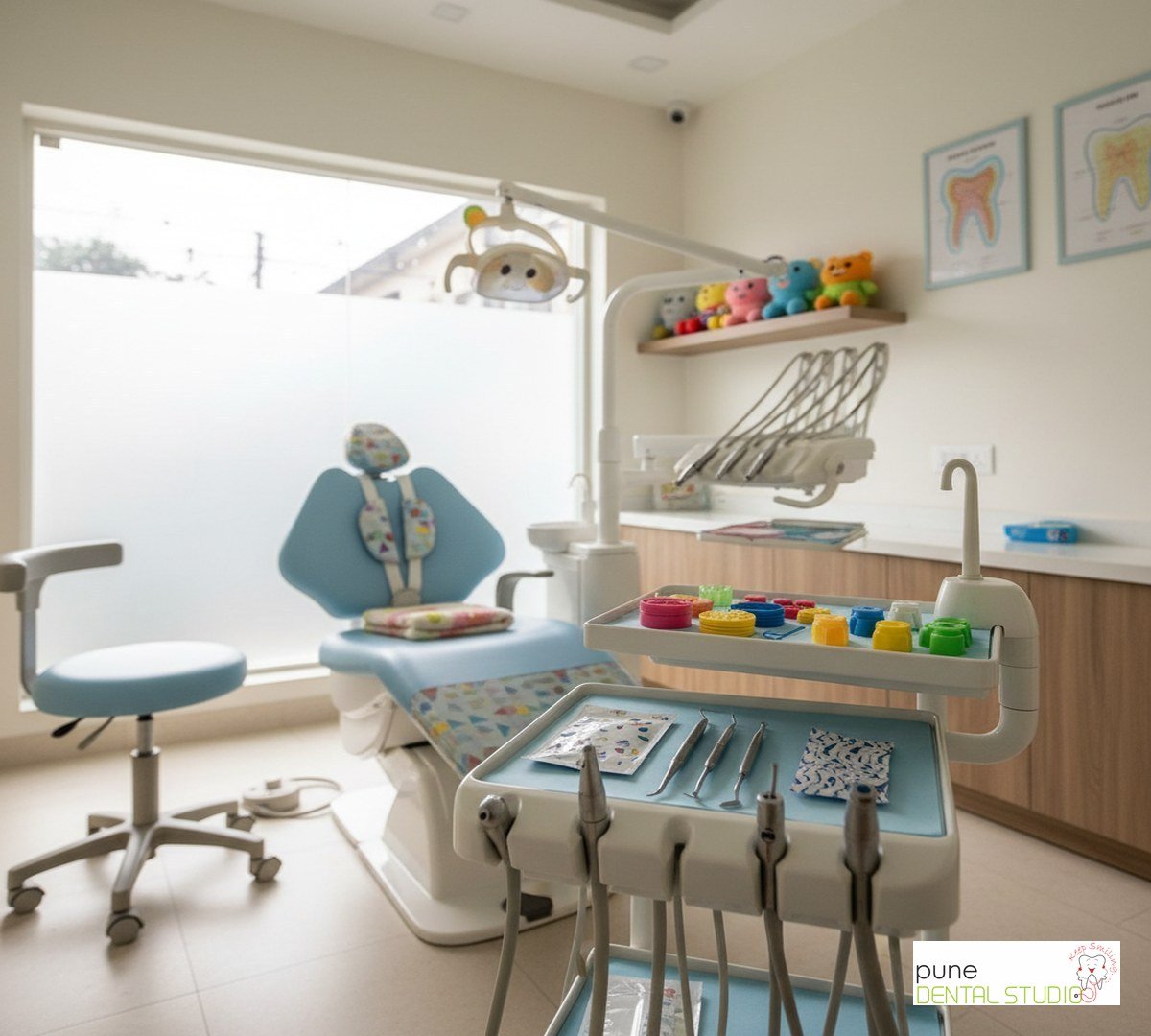
Our clinic itself is built to calm nervous systems. There’s no harsh dental smell, no blinding lights, no loud drills echoing. We have noise-cancelling headphones, warm lighting, aromatherapy, and a living green wall. It sounds like a spa because we’ve intentionally designed it that way. Children respond to that calm environment immediately.
And here’s something many parents don’t expect: we let your child pause. At any point, if they need a break, we stop. No judgment, no rushing. That sense of control is everything.
What to Expect: A Step-by-Step Walkthrough
Transparency matters, especially with children. Here’s what a typical pulp therapy visit looks like:
Before we begin: We’ll have already explained the plan in writing and shown you exact costs. No surprises at checkout.
The numbing: We apply topical gel first, then give the injection slowly. Most children don’t feel it.
The procedure: We gently remove the affected pulp tissue, clean the space, and fill it with a biocompatible material. The whole thing usually takes 20–30 minutes, depending on which tooth and how deep the infection is.
The seal: We close the tooth with a tooth-coloured filling that looks natural and protects it while the permanent tooth develops.
After care: We send you home with clear, written aftercare instructions. The tooth may feel slightly tender for a day or two–that’s normal. We’re always a message or call away if you have questions.
Digital Scanning: Seeing What’s Really Going On
One thing that changes everything is being able to see what we’re talking about.
Instead of old-fashioned X-rays and guesswork, we use a 3D intraoral scanner. It’s a tiny digital wand that creates a live, three-dimensional map of your child’s tooth right there on the screen. You and your child can see exactly where the problem is, how deep it goes, and what we’re going to do about it.
This does two things: it removes fear (because you’re not imagining something worse), and it gives your child a sense of agency. They can see their own mouth and understand the plan.
Aftercare: Keeping the Tooth Healthy Until the Permanent One Arrives
After pulp therapy, the tooth is no longer "living" in the traditional sense, but it’s still functional and needs care.
Gentle brushing: Use a soft toothbrush and fluoride toothpaste. Your child should brush twice a day, just like before.
Avoid hard, sticky foods: For the first week, stick to soft foods. Avoid chewing directly on the treated tooth.
Regular check-ups: We’ll want to see your child every 6 months to make sure the tooth is staying healthy and the permanent tooth is developing normally underneath.
Watch for changes: If the tooth becomes painful again, swells, or darkens, let us know right away. These are rare, but we want to catch them early.
Most children forget about the treated tooth within days and go back to their normal routine.
Why We Don’t Recommend "Waiting It Out"
I understand the impulse. A baby tooth is going to fall out anyway, so why treat it? Here’s why:
An infected or painful tooth affects your child’s quality of life right now. It can make eating uncomfortable, disrupt sleep, and cause stress. It can also affect how the permanent tooth develops underneath. In rare cases, an untreated infection can spread.
Pulp therapy is a straightforward, gentle way to solve the problem without unnecessary extraction. We preserve the tooth, which helps guide the permanent tooth into the right position.
Financial Transparency: No Surprises, Ever
I know cost matters, especially when you’re already worried about your child’s comfort.
At Pune Dental Studio, we don’t do hidden fees or surprise bills. Before we start, you get a written treatment plan with exact costs. We accept credit cards, debit cards, Google Pay, and mobile payments. We’ll discuss options with you upfront, and you’re always in control of what happens next.
A Note on Prevention: The Best Medicine
While pulp therapy is gentle and effective, preventing the need for it in the first place is even better.
Regular brushing with fluoride toothpaste, limiting sugary snacks and drinks, and bringing your child in for check-ups every 6 months can catch small problems before they become big ones. We’re happy to talk about prevention strategies that work for your family’s lifestyle.
Frequently Asked Questions
How long does pulp therapy take? Most treatments take 20–30 minutes. We never rush.
Will my child be in pain during the procedure? No. We numb the area thoroughly, and your child should feel pressure and vibration, but not pain. If they do feel pain, we stop and add more numbing.
Can a treated tooth get infected again? It’s rare if we’ve sealed it properly and your child takes care of it. We monitor it at every check-up.
What if my child is extremely anxious about the dentist? We’ve worked with many anxious children. Our calm environment, clear communication, and "pause anytime" approach help tremendously. We’re also happy to schedule a pre-visit consultation just to talk through it.
Will the treated tooth stay until the permanent one comes in? Most of the time, yes. The treated tooth usually stays functional until the permanent tooth naturally pushes it out.
Is pulp therapy covered by insurance? Most dental insurance plans cover pulp therapy for children. We can check your coverage and give you a clear estimate before we start.
Let’s Keep Your Child Comfortable and Smiling
If your child is experiencing tooth pain or you’ve been told they need pulp therapy, I want you to know that you’re not alone–and it’s going to be okay. We’ve helped hundreds of children through this, and they walk out feeling relieved and proud of themselves.
Your child’s comfort and confidence matter to us. That’s why we’ve built everything here–from the calm environment to the transparent communication to the advanced technology–around making their experience as gentle and clear as possible.
If you’d like to talk through your child’s situation, ask questions, or schedule a consultation, please reach out. You can call or WhatsApp us at +91 98811 92594, or visit us at Office No 102, 1st floor, The Mint, Off Baner Road, Opposite Kapil Mallhar Society, Baner, Pune.
We’re here to listen, explain, and help your child smile again.
Warm regards,
Dr. Sunayana Khade Pune Dental Studio, Baner
Dentistry that feels like a deep breath.
See it for yourself – your first visit is a conversation, not a commitment.
Book a Visit