
Why Your Dentist in Aundh, Baner & Balewadi Still Recommends 3D Scanning Over Old Impression Trays (And Why It Matters for Gag Reflex Sufferers)
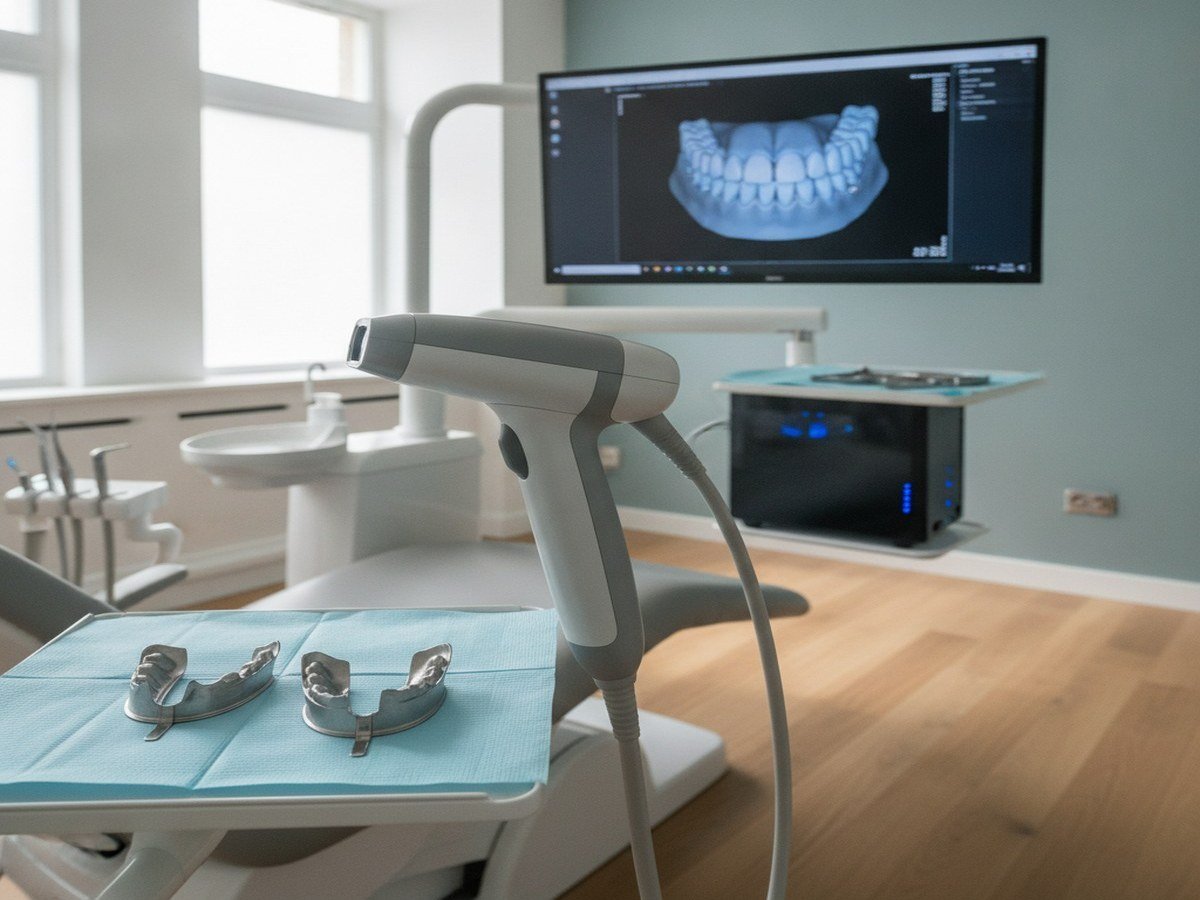
The Tray Situation Nobody Wants to Talk About
Let me start with something I hear almost every week: "Dr. Khade, do we really have to use those trays?"
Those trays–the pink or blue gooey moulds that sit in your mouth for what feels like forever–are the reason some of my patients have genuinely delayed dental work. A strong gag reflex isn’t weakness or nervousness. It’s a real, involuntary reflex that makes traditional impression-taking genuinely uncomfortable. And honestly? There’s no reason to white-knuckle through it anymore.
I’ve been practicing dentistry for over 20 years, and I’ve watched this shift happen in real time. The technology changed, but many clinics didn’t. They still pull out those trays because that’s what they’ve always done. At Pune Dental Studio, we ditched them entirely about five years ago. I want to walk you through why that decision matters–especially if you’re someone who’s been dreading your next crown, bridge, or aligner appointment.
What Those Old Trays Actually Do (And Why They’re Triggering)
Traditional impression trays work by filling your entire mouth with a thick, pasty material. The tray sits there while the material sets–usually 3 to 5 minutes, though it feels longer. For people without a sensitive gag reflex, it’s mildly unpleasant. For others, it’s genuinely distressing.
Here’s what’s happening in your mouth: the tray pushes back on your soft palate, the back of your tongue, and your throat. That’s a direct trigger for your gag reflex. Your body is literally trying to protect your airway–it’s not a personal failing. It’s biology.
The material itself–usually alginate or polyvinyl siloxane–can taste unpleasant and feel claustrophobic. Some patients hold their breath. Others feel panic creeping in. I’ve had people literally leave appointments because the anxiety became too much.
And here’s the thing: even if you power through it, the tray method isn’t always the most accurate. It can distort slightly as it sets. Small movements of your head or the tray can create minor errors that compound when your crown or bridge is being made in the lab.
Enter 3D Intraoral Scanning: The Actual Game-Changer
A 3D intraoral scanner is a small, wand-like device about the size of an electric toothbrush head. Instead of filling your mouth with material, I use it to take hundreds of tiny photographs of your teeth and gums–from every angle–in about 30 to 60 seconds. No material. No tray. No gag reflex trigger.
Here’s what makes it genuinely different:
Speed. The entire scan takes less time than a traditional tray would sit in your mouth. Most patients are surprised by how quick it is.
Comfort. The scanner doesn’t push on your soft palate or throat. You can breathe normally. You can swallow. There’s nothing triggering your gag reflex.
Accuracy. The digital data is sharper and more precise than a physical impression. The lab receives a perfect 3D model–no distortion, no guesswork. That means your crown or bridge fits better on the first try, and adjustments are minimal.
Visibility. On the screen in front of you, you can see a live, colour 3D map of your entire mouth. You can watch the scan happen. You can see exactly where the problem is and what we’re planning to fix. That transparency is calming for anxious patients.
Why Dentists Still Use Old Trays (Hint: It’s Not Because They’re Better)
I’ll be honest with you: some clinics still use traditional trays because the equipment is cheaper upfront, and they’ve been doing it forever. There’s also a learning curve with digital scanning–you have to train your team, invest in the technology, and change your workflow.
But from a patient perspective? There’s no real advantage to the old method. You’re not getting better results. You’re not saving money. You’re just experiencing unnecessary discomfort.
At Pune Dental Studio, we made the switch because our patients’ experience matters as much as the clinical outcome. When you remove barriers to care–like the fear of gagging–people actually show up for their appointments. They’re calmer. They heal better. They’re more likely to follow through with complex treatments like implants or orthodontics that require multiple visits.
What 3D Scanning Means for People with Sensitive Gag Reflexes
If you’ve been putting off dental work because of your gag reflex, this is the part that matters most.
With 3D scanning, you’re not fighting your body’s natural response. You’re working with it. The procedure is so quick and non-invasive that even patients with severe gag reflexes can get through it without anxiety.
I’ve had patients tell me they were shocked–genuinely shocked–that we were done. They were braced for discomfort, and it never came. That’s not a small thing. Dental anxiety is real, and removing one major trigger can shift someone’s entire relationship with dental care.
For crowns, bridges, veneers, aligners, or any treatment that requires a precise model of your mouth, 3D scanning is the clear choice. It’s faster, more accurate, and infinitely more comfortable.
The Ripple Effect: Better Outcomes, Fewer Adjustments
Here’s something else I’ve noticed: when the impression is perfect, everything downstream gets better.
Your crown fits on the first try. Your bridge doesn’t need grinding and adjusting. Your aligners track properly from day one. The lab technician has such clear data that they can make decisions with confidence, not guesswork.
That means fewer appointments for you, less time in the chair, and better long-term results. It’s not just about comfort–it’s about clinical excellence.
What to Expect When You Come In
If you’re coming to us for a crown, bridge, or any treatment that needs a digital model, here’s what happens:
We’ll do a quick consultation and chat about what you need. Then, when it’s time for the scan, I’ll walk you through it step by step. You’ll sit back in a comfortable position. I’ll use the scanner to take images of your teeth and gums from multiple angles. You can see everything on the screen in real time. The whole thing takes about a minute, sometimes less.
There’s no material, no tray, no gagging. You can breathe normally throughout. If you need a break, just raise your hand and we pause–no drama.
Once the scan is complete, the data goes to our lab, and your restoration is made with precision. We’ll see you again when it’s ready to fit and adjust.
A Word on Aftercare and Comfort
Because 3D scanning is non-invasive, there’s no aftercare involved. Your mouth isn’t sore. You don’t need to avoid food or drinks. You can go straight back to your day.
If we’re placing a crown or bridge after the scan, that’s a separate appointment, and we’ll talk through what to expect then. But the scanning part itself? It’s genuinely zero-fuss.
Why This Matters Beyond Just Comfort
I think about this a lot: how many people delay necessary dental work because they’re afraid of the process? How many crowns don’t get placed because someone’s gag reflex makes them anxious? How many orthodontic cases never start because the patient can’t handle traditional impressions?
Technology like 3D scanning removes that barrier. It says, "Your comfort matters. Your fear is valid. And we have a better way."
That’s not just nice–it’s clinically important. When patients aren’t anxious, they’re more likely to maintain their teeth, show up for check-ups, and catch problems early. They’re more likely to invest in their oral health long-term.
FAQ
Does 3D scanning work for every type of dental work? For most restorative work–crowns, bridges, veneers, aligners–absolutely. For some surgical or complex cases, we might combine it with other imaging, but the scan is always the foundation.
Is 3D scanning more expensive than traditional trays? No. The cost is comparable, and you’re getting a better result with fewer adjustments needed down the line.
What if I still feel anxious during the scan? We can pause anytime. The scan is quick, and we go at your pace. Many patients find that once they see how simple it is, their anxiety drops completely.
Can I see my scan on screen? Yes. That’s one of the best parts. You can watch the 3D model of your mouth build in real time, and we can show you exactly what we’re planning to do.
How long does the scan take? Usually 30 to 60 seconds. Much faster than a traditional tray.
Will the scan be accurate for my crown or bridge? More accurate than a traditional impression. The digital data is precise, and the lab works from a perfect 3D model with no distortion.
Let’s Talk About Your Teeth
If you’ve been putting off dental work because of your gag reflex or dental anxiety, I want you to know that we’ve thought about this. We’ve invested in technology specifically to make your experience calmer and more comfortable. That’s not just a nice-to-have–it’s central to how we practice.
Whether you need a crown, a bridge, aligners, or just a regular check-up, we’re here to make it as easy and stress-free as possible. No judgment, no pressure, just honest, transparent care.
If you’re in Aundh, Baner, Balewadi, or anywhere in Pune and you’d like to chat about what we can do for you, reach out. We’d love to meet you.
Phone / WhatsApp: +91 98811 92594
Address: Office No 102, 1st floor, The Mint, Off Baner Road, Opposite Kapil Mallhar Society, Baner, Pune, Maharashtra 411045
Looking forward to seeing you smile.
Dentistry that feels like a deep breath.
See it for yourself – your first visit is a conversation, not a commitment.
Book a Visit